Grease trap maintenance is one of those tasks that restaurant owners know they need to handle but often put off until something goes wrong. In California, where local health departments actively enforce grease management rules, waiting too long can mean failed inspections, expensive fines, and worst of all, a grease overflow that shuts down your kitchen during peak hours.
This guide breaks down exactly how often you should clean your grease trap, what California regulations actually require, and how to spot the warning signs before a small maintenance task turns into a major problem.
What California Law Actually Says
California does not have a single statewide law dictating exactly how often you must clean your grease trap. Instead, grease management is regulated at the local level by your city or county wastewater authority. These agencies issue Fats, Oils, and Grease (FOG) ordinances that set specific requirements for commercial kitchens.
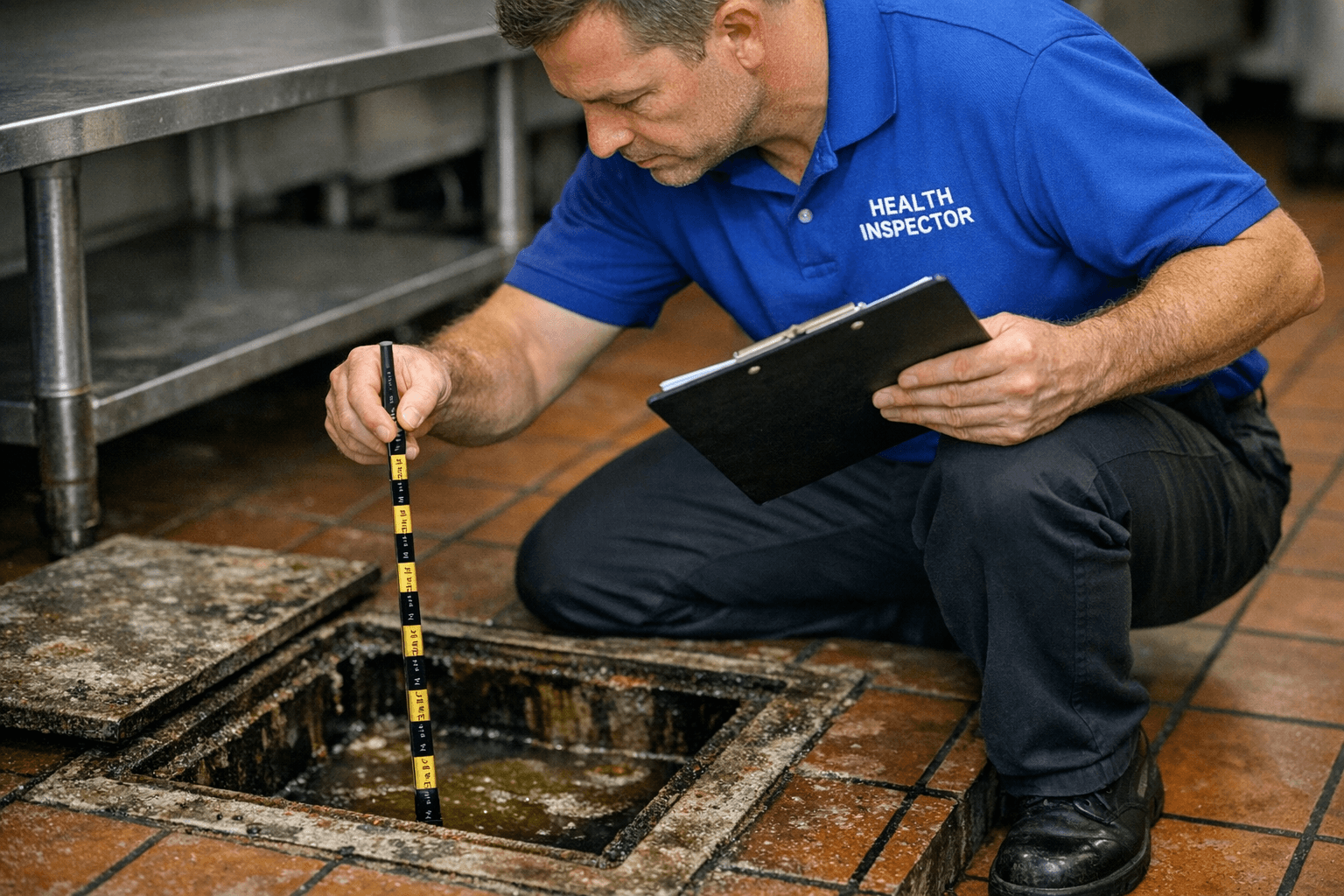
The most common standard across California jurisdictions is the one-quarter rule: your grease trap must be pumped when the combined thickness of floating grease and settled solids reaches 25 percent of the trap's total depth. Some cities, including Los Angeles and San Francisco, publish this explicitly in their FOG program guidelines.
Other jurisdictions take a simpler approach and mandate a fixed cleaning schedule, typically every 90 days for standard interceptors.
Factors That Affect Cleaning Frequency
Not every restaurant needs the same cleaning schedule. Several factors determine how quickly your trap fills up:
- Menu type: Kitchens that do heavy frying, such as fried chicken or fish-and-chips restaurants, produce significantly more grease than a salad-focused cafe.
- Daily covers: A restaurant serving 300 meals per day will fill a trap much faster than one serving 50.
- Trap size: Under-sink traps (20 to 50 gallons) need attention far more often than in-ground interceptors (500 to 2,000 gallons).
- Pre-treatment practices: Using dry-wipe procedures, scraping plates before washing, and training staff on proper disposal all reduce the grease load entering your trap.
Recommended Cleaning Schedules by Restaurant Type
While your specific schedule depends on the factors above, here are general guidelines based on restaurant type:
| Restaurant Type | Typical Trap Size | Recommended Frequency |
|---|---|---|
| Fast food / heavy frying | 40-100 gal (interior) | Every 2-4 weeks |
| Full-service casual dining | 750-1,500 gal (exterior) | Every 30-60 days |
| Fine dining / low-fry menu | 750-1,500 gal (exterior) | Every 60-90 days |
| Bakery / cafe | 20-50 gal (under-sink) | Every 1-2 weeks |
| Food truck commissary | Varies | Every 2-4 weeks |
These are starting points. Track your actual grease accumulation over several cycles to dial in the right frequency for your kitchen.
Warning Signs Your Trap Needs Pumping Now
Do not wait for your scheduled cleaning if you notice any of these symptoms:
- Slow drains: Kitchen sinks or floor drains that empty sluggishly, especially after peak service hours.
- Bad odors: A rotten or rancid smell near drains or the trap access point. This indicates decomposing grease and food solids.
- Grease in unexpected places: Grease residue appearing in dishwasher drains, mop sinks, or on the floor near drain openings.
- Gurgling sounds: Air struggling to pass through grease buildup creates audible gurgling from drain pipes.
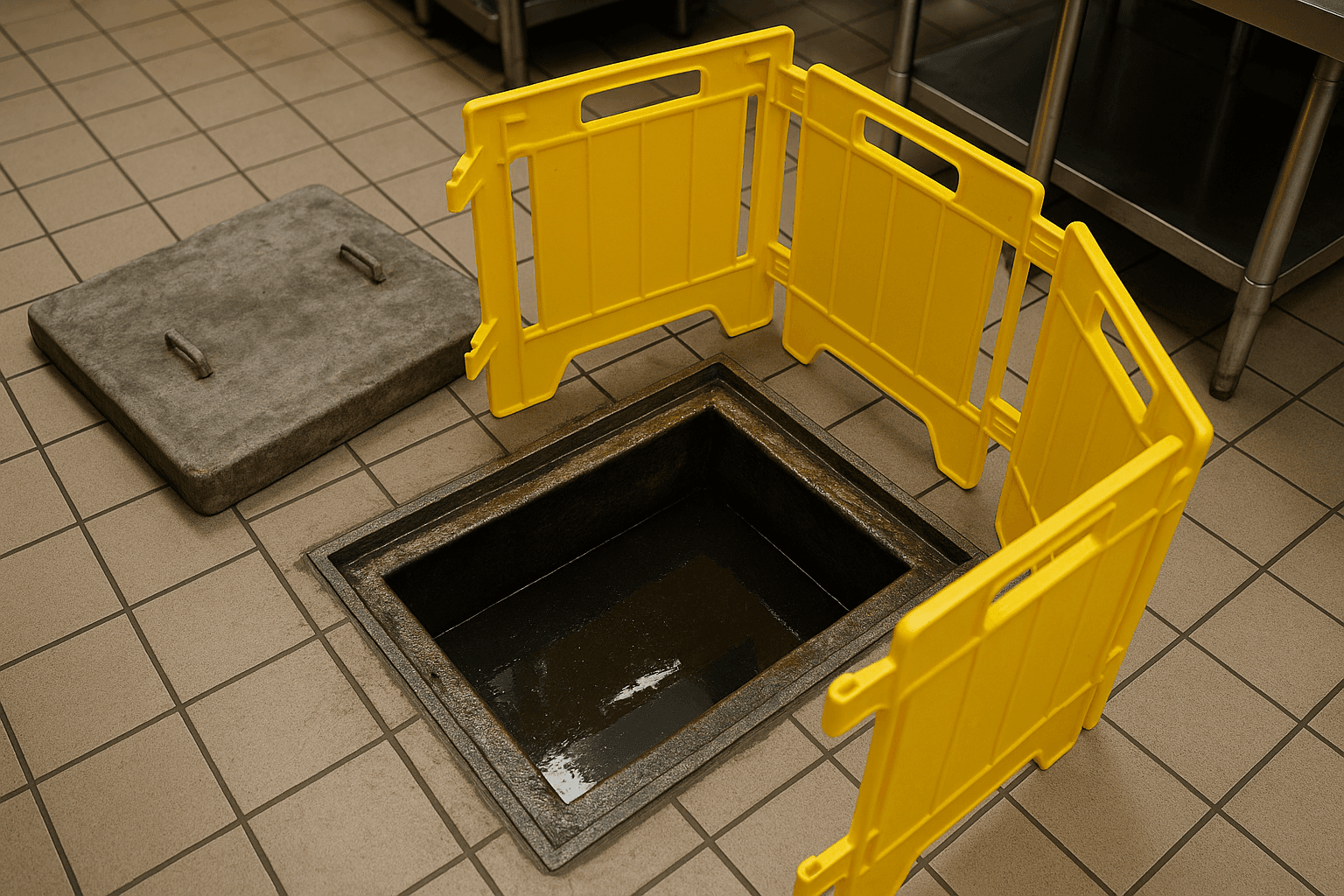
- Visible grease cap: If you open the trap lid and see a thick, solid layer of grease on top, it is past due for pumping.
Any of these signs means you should call your hauler immediately rather than waiting for the next scheduled service.
How to Stay Compliant Without Overthinking It
The simplest way to stay on the right side of California grease trap regulations is to follow a three-part system:
Set a baseline schedule. Start with the recommended frequency for your restaurant type from the table above. Adjust based on what you observe at each pumping.
Keep a maintenance log. Record the date of every cleaning, the hauler who performed it, and the amount of waste removed. California health inspectors will ask to see this log. Keep it in a binder near the trap or in a digital file you can pull up quickly.
Use a licensed hauler with proper manifests. Every grease waste load must be documented with a manifest that shows where the waste was collected, who transported it, and where it was delivered for processing. Your hauler should provide this automatically. If they do not, switch to one who does.
Between Cleanings: Daily Maintenance That Matters
Professional pumping is essential, but daily kitchen habits have the biggest impact on how quickly your trap fills and how well it performs between cleanings.
- Dry-wipe all cookware before washing. Use paper towels or a dedicated scraper to remove as much grease as possible before anything touches water.
- Scrape plates thoroughly into the trash before they hit the dish pit.
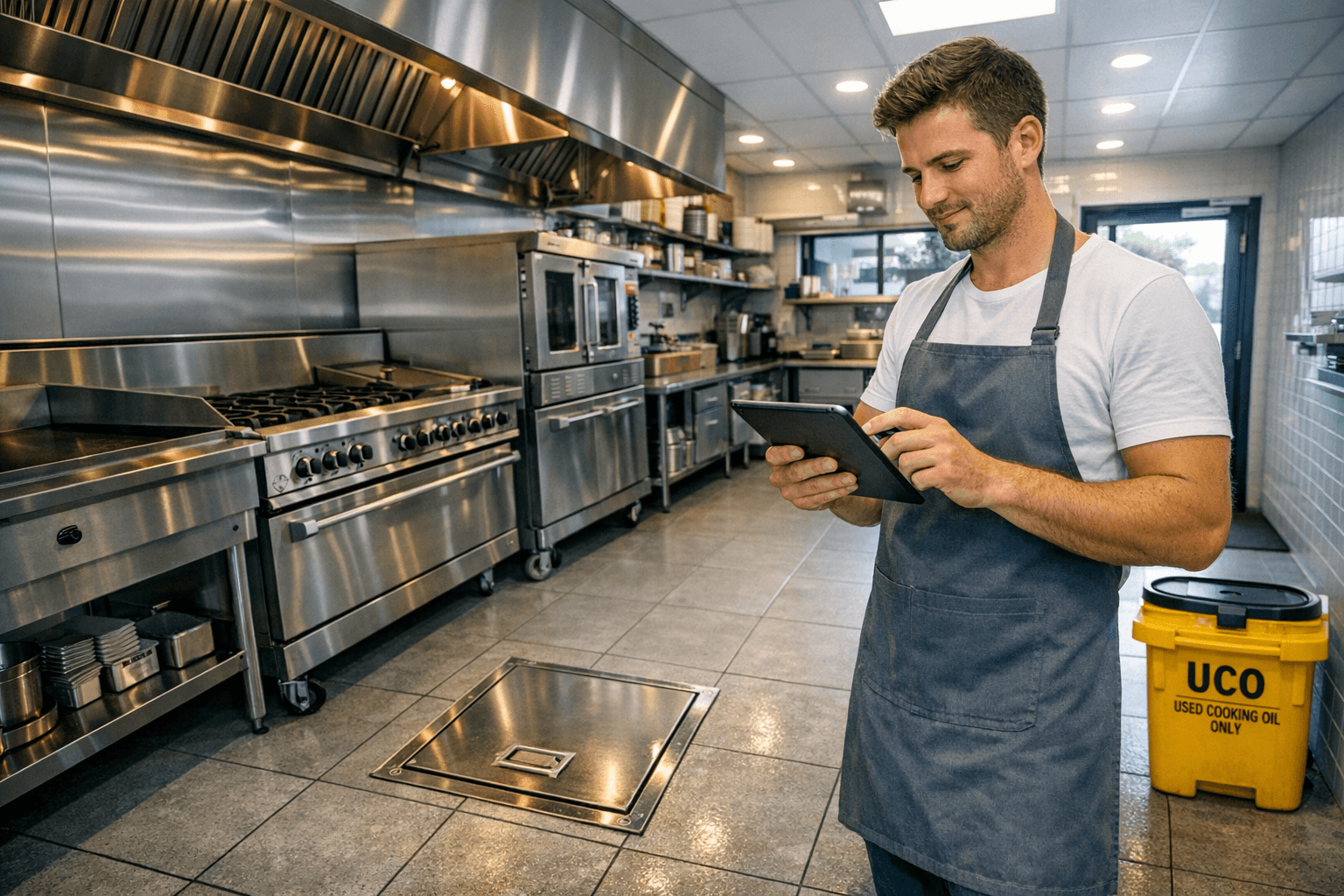
- Never pour oil down the drain. Collect waste oil in dedicated containers for your UCO hauler.
- Train every kitchen employee. New hires should learn proper grease disposal during their first shift, not after a problem occurs.
These simple practices can extend the time between professional pumpings by 20 to 40 percent, saving you money and reducing the risk of overflow.
The Bottom Line
There is no single answer to how often you should clean your grease trap in California because it depends on your local regulations, your kitchen volume, and your trap size. But the safest approach is to start with a conservative schedule, measure your grease levels at each pumping, and adjust from there.
The restaurants that never have grease problems are not the ones with the most expensive equipment. They are the ones with consistent daily habits and a pumping schedule they actually follow.