Professional Grease Trap Cleaning That Keeps You Compliant
Scheduled pumping, thorough cleaning, and documented service for restaurants across Orange County, Los Angeles, and San Diego. Never worry about a failed FOG inspection again.
Professional Grease Trap Cleaning That Keeps You Compliant
Scheduled pumping, thorough cleaning, and documented service for restaurants across Orange County, Los Angeles, and San Diego. Never worry about a failed FOG inspection again.
How It Works
Three steps. Five minutes. Done.
Request Service
Fill out a 30-second form or call us. No credit card, no commitment.
We Show Up On Time
Our uniformed driver arrives in a branded truck within your scheduled window.
Stay Compliant Automatically
Get digital manifests, service reports, and compliance records in your dashboard.
How We Clean
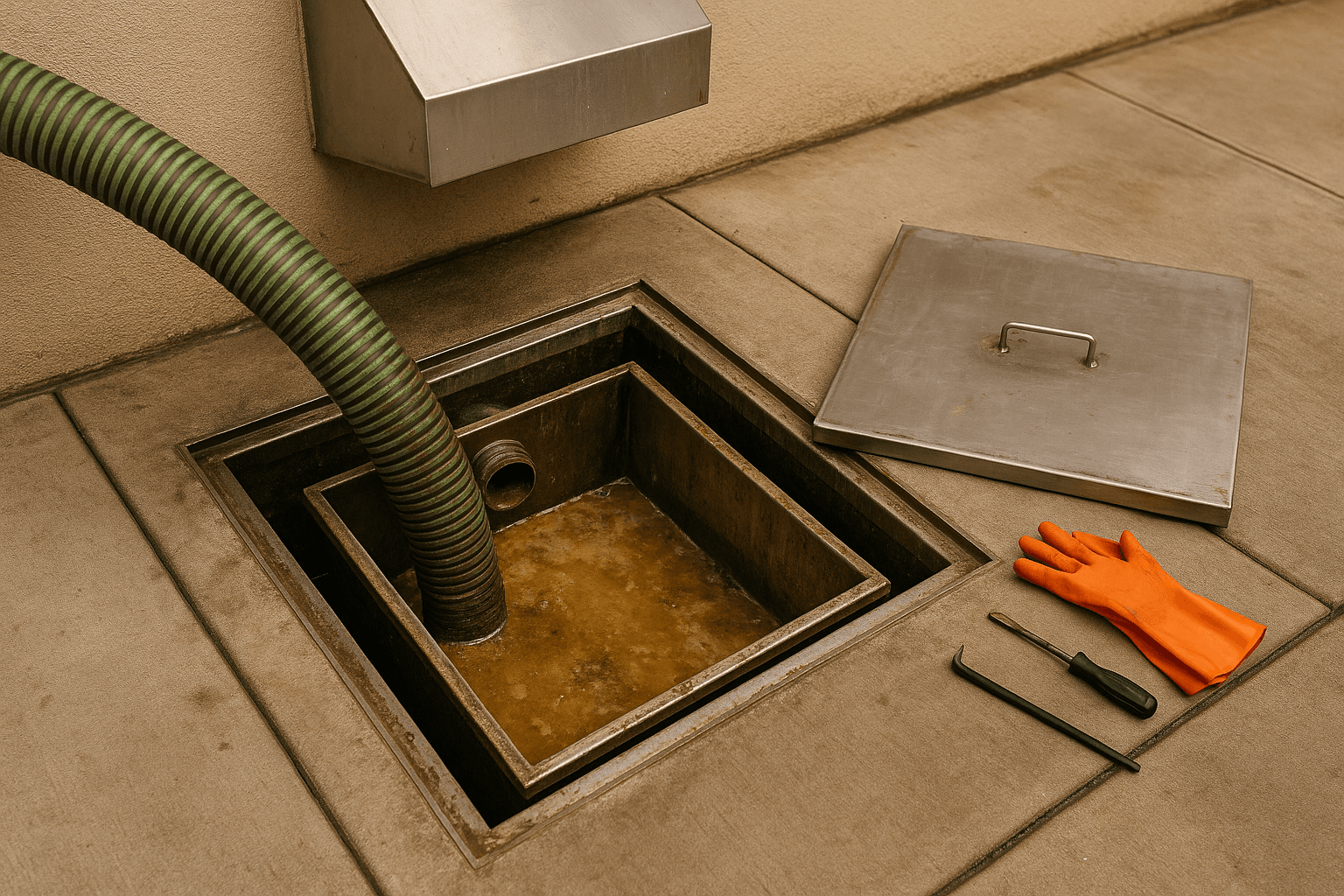
Our grease trap cleaning process goes well beyond a basic pump-out. When our technician arrives, they start by measuring the grease cap depth and recording it for your service report. Next, they pump the entire contents of the trap — grease, solids, and wastewater — into our vacuum truck. Once the trap is empty, the technician scrapes the baffles, sidewalls, and floor of the trap to remove hardened buildup that pumping alone cannot reach. They flush the inlet and outlet lines to confirm flow is unobstructed, then reassemble the trap, secure the lid, and test the drain from your nearest sink to verify proper operation. The entire process takes thirty to sixty minutes depending on trap size. Before leaving, your technician generates a detailed service report with before-and-after measurements, volume removed, and the condition of your trap components so you have a full record for health department inspections.
- Full pump-out of grease, solids, and wastewater on every visit
- Interior scraping of baffles, sidewalls, and floor
- Inlet and outlet line flush with flow verification
- Digital service report with before-and-after measurements
- Thirty to sixty minute service window depending on trap size
Frequency Guide
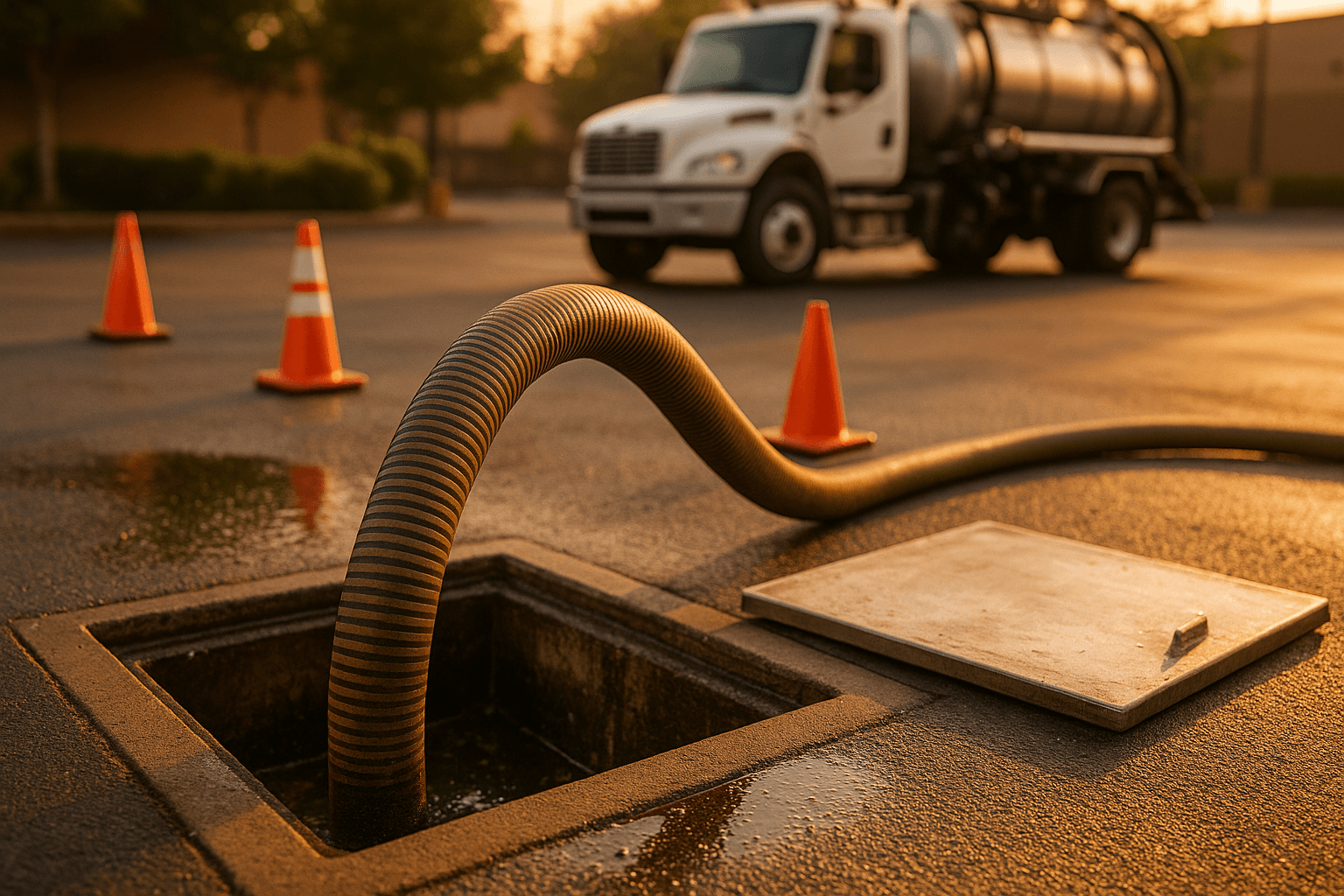
How often you need grease trap cleaning depends on your trap size, your kitchen volume, and what you cook. Most municipalities require that your grease trap never exceed twenty-five percent capacity, which is the standard threshold that triggers a violation during a FOG inspection. As a general rule, a small indoor trap serving a low-volume kitchen needs cleaning every thirty to sixty days. A mid-size trap at a busy full-service restaurant typically needs service every sixty to ninety days. Large outdoor interceptors at high-volume operations — think fried chicken chains, hotel kitchens, or food courts — may need monthly service to stay compliant. We evaluate your trap during the first visit and recommend a schedule based on actual accumulation rates rather than guesswork. If your accumulation rate changes due to a menu update or seasonal volume shift, we adjust your schedule proactively.
- Small indoor traps — every 30 to 60 days
- Mid-size restaurant traps — every 60 to 90 days
- Large outdoor interceptors — monthly service
- Schedule based on actual accumulation, not guesswork
- Proactive adjustments for menu changes and seasonal volume
What's Included
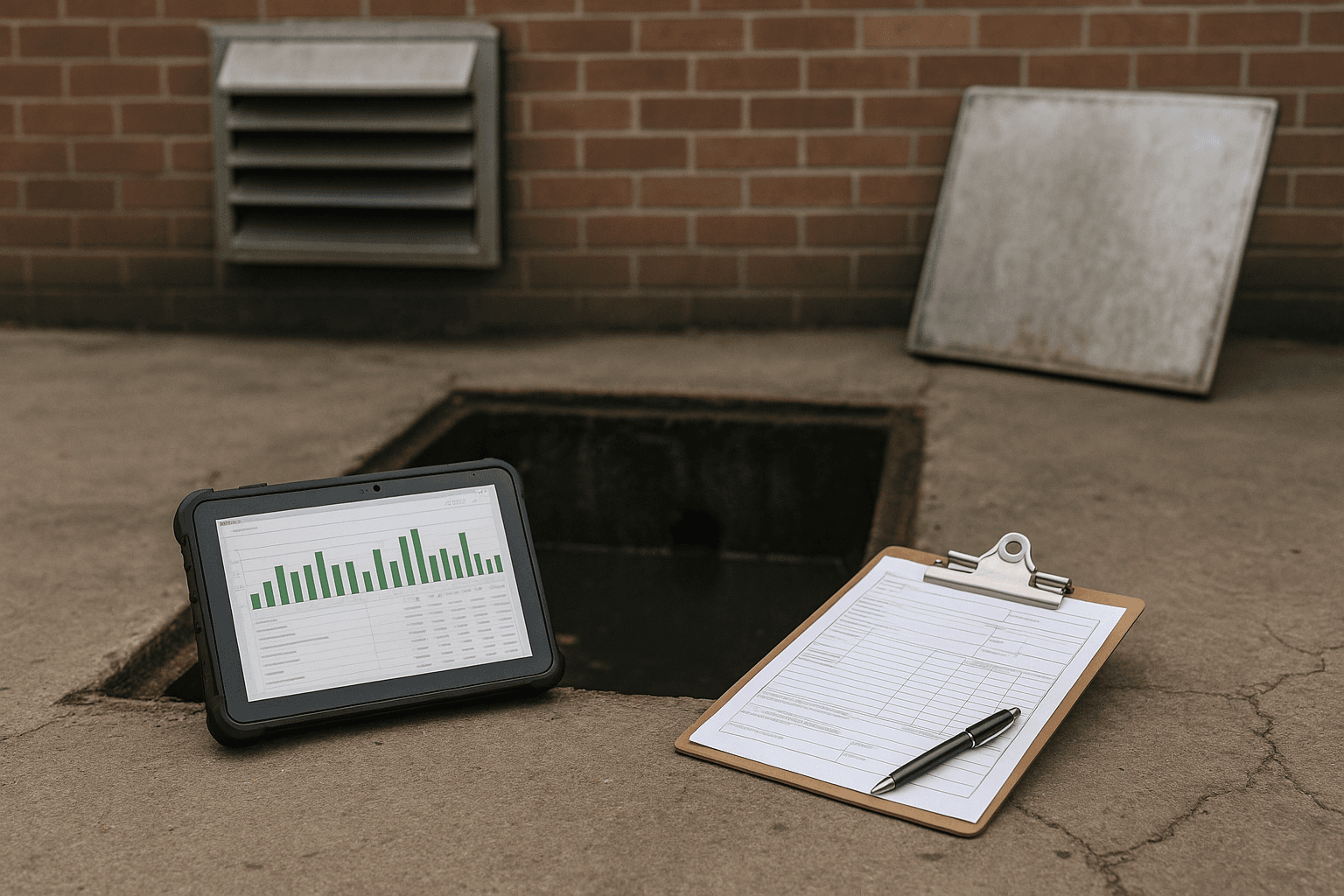
Every grease trap cleaning appointment includes the complete service package your kitchen needs to stay compliant and odor-free. Our technician performs a full pump-out, interior scraping, baffle inspection, and flow test on every visit. You receive a digital service report documenting the date, volume removed, grease cap depth, trap condition, and any maintenance recommendations. These reports are stored in your online dashboard alongside your cooking oil pickup manifests, giving you a single compliance hub for all grease-related services. If we identify a cracked baffle, deteriorating gasket, or any component that needs repair, we flag it immediately with photos and a repair estimate so you can address it before it becomes a code violation. We also provide a door sticker showing your last service date and next scheduled visit, which inspectors appreciate seeing.
- Digital service report with date, volume, and trap condition
- Online dashboard alongside your cooking oil pickup manifests
- Component inspection with photos and repair estimates
- Door sticker showing last service and next scheduled visit
- Single compliance hub for all grease-related services
Compliance
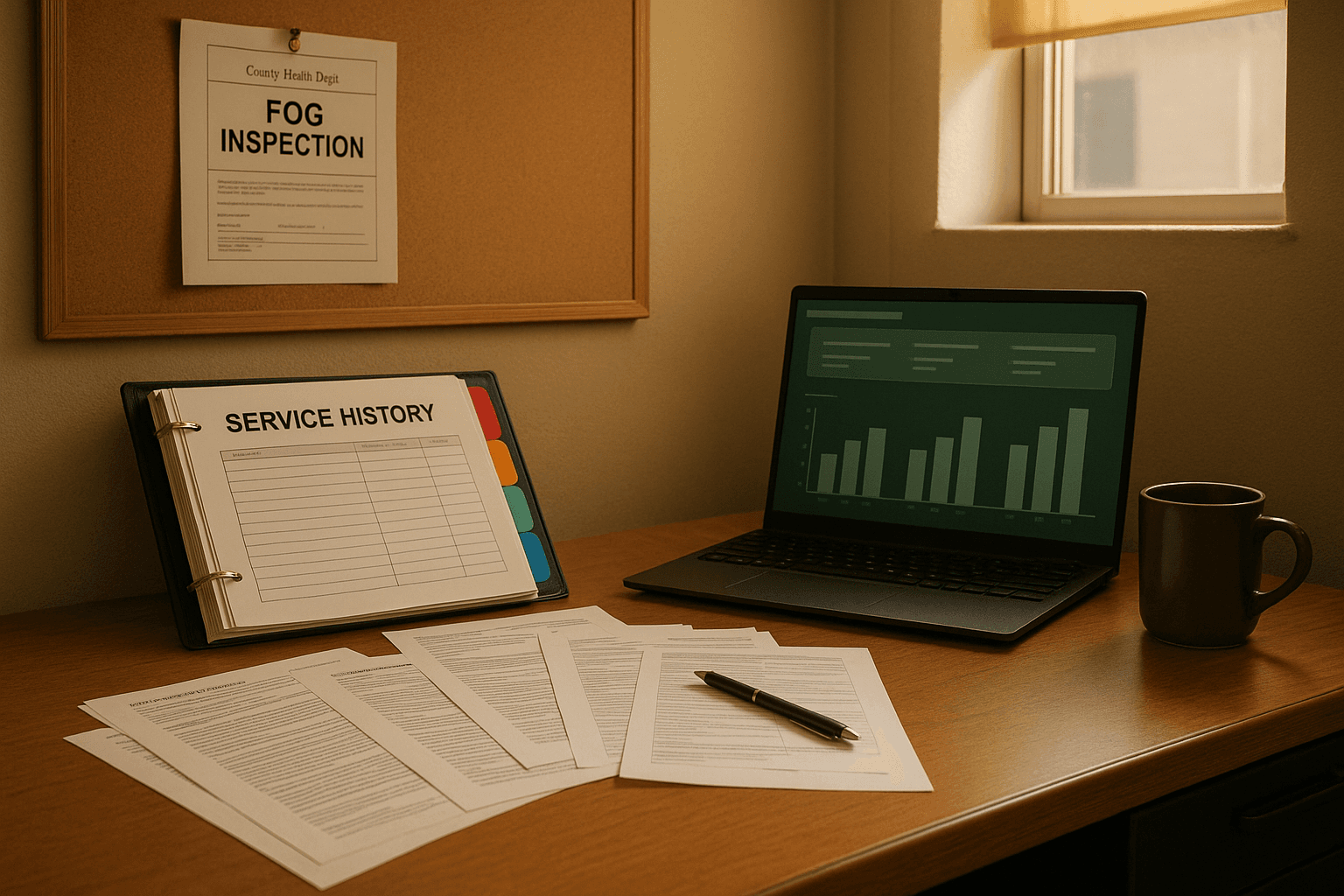
Fats, oils, and grease — collectively known as FOG — are regulated by local sewer authorities and health departments across Southern California. If your grease trap is not cleaned on schedule, you risk FOG violations that carry fines ranging from a few hundred dollars to several thousand per incident depending on your jurisdiction. Repeated violations can lead to mandatory increased pumping frequency at your expense, or in extreme cases, a notice to cease food preparation until the issue is resolved. Our service keeps you ahead of inspections by maintaining a documented cleaning schedule with verifiable records. Every service report includes the information that inspectors look for: service date, trap condition, volume removed, and technician credentials. If you receive a FOG notice or inspection request, we can provide your complete service history within minutes to demonstrate ongoing compliance.
- Documented cleaning schedule with verifiable records
- Service reports include everything inspectors look for
- Complete service history available within minutes
- Fines range from hundreds to thousands per violation
- Stay ahead of FOG inspections with proactive scheduling
What's Included
Everything you need — nothing you don't.
- Complete pump-out of all grease, solids, and wastewater
- Interior scraping of baffles, walls, and floor
- Inlet and outlet line flush with flow verification
- Digital service report with measurements and photos
- Online dashboard access for all service records
- Proactive schedule recommendations based on accumulation
- Door sticker with last service date and next visit
- Component inspection with flagged repair recommendations
Frequently Asked Questions
The most reliable indicator is the depth of the grease cap sitting on top of the water inside your trap. If it exceeds twenty-five percent of the total trap depth, you are likely due for service and may already be out of compliance. Practical warning signs in your kitchen include slow-draining sinks, foul odors coming from floor drains or the trap area, and grease backing up into sinks or onto the floor. If you notice any of these, do not wait for your next scheduled cleaning — call us to move your service date up. Ignoring the warning signs risks a sanitary sewer overflow, which can result in significant fines from your local sewer authority and a very unpleasant cleanup situation in your kitchen or parking area.
A grease trap is typically a smaller unit installed indoors, often under a three-compartment sink or near the dishwasher. These units range from about twenty to one hundred gallons and handle lower volumes of FOG. A grease interceptor is a larger unit installed outdoors, usually underground in the parking lot or near the building exterior. Interceptors range from five hundred to several thousand gallons and are designed for high-volume kitchens. We service both types using the same thorough cleaning process. The main difference in service is time and equipment — interceptors take longer to pump and require a larger vacuum truck. Regardless of which type your kitchen has, the cleaning frequency depends on accumulation rate rather than physical size alone.
We schedule all grease trap cleanings during your slowest hours to minimize disruption, and most operators choose early morning service before the lunch rush begins. For indoor traps, the technician needs access to the trap and the nearest sink for about thirty minutes. During that window, you should avoid running water through the drains connected to the trap. For outdoor interceptors, kitchen disruption is minimal because the work happens entirely outside. The only thing we ask is that you reduce heavy drain usage for about fifteen minutes while we test flow at the end of the service. Most kitchen teams tell us they barely notice we are there. We coordinate the schedule with your manager ahead of time so everyone knows what to expect.
If an inspector measures your grease cap and it exceeds the allowable threshold — typically twenty-five percent of total trap depth — you will receive a FOG violation notice. Depending on your jurisdiction, the first offense usually comes with a written warning and a required corrective action, which means getting your trap cleaned immediately and providing proof of service. Repeat violations escalate to monetary fines that can range from two hundred to five thousand dollars or more per incident. In severe cases, the sewer authority can mandate a more frequent cleaning schedule at your cost or require you to install a larger interceptor. The simplest way to avoid this entirely is to maintain a regular cleaning schedule with documented records that demonstrate ongoing compliance.
Yes. All grease trap waste we collect is transported to licensed disposal and processing facilities in full compliance with local and state regulations. We maintain detailed manifests for every load that document the origin, volume, date, and receiving facility. Unlike some unlicensed operators who illegally dump waste into storm drains or unauthorized locations, we follow a fully documented chain of custody from your trap to the processing facility. This matters because as the generator of the waste, your restaurant can be held liable if your hauler disposes of it improperly. By using a licensed service with verifiable disposal records, you protect your business from potential environmental fines and liability claims.
In most cases, yes. If your grease trap cleaning and cooking oil pickup fall on the same schedule, we coordinate both services into a single visit so you only deal with one truck and one appointment. This is especially convenient for busy kitchens that do not want multiple service vehicles showing up on different days. The combined visit typically takes forty-five to seventy-five minutes depending on your trap size and oil volume. Both services generate their own separate documentation — a grease trap service report and a CDFA oil manifest — but everything is accessible from the same online dashboard. If your cleaning and pickup schedules do not align naturally, we can adjust one or both to synchronize them at your request.
What Our Clients Say
“We got hit with a county FOG inspection and I was able to pull up every single service report in about thirty seconds on my phone. The inspector was genuinely impressed. Before this, I had a folder full of handwritten receipts that half the time were illegible. Now every cleaning is documented with photos and measurements. No more stress during inspections.”

David Chen
General Manager, Pacific Grill House
Irvine, CA
“Our grease trap used to smell terrible by the end of every month and the drains would slow to a crawl. Since we started with this service the trap gets cleaned before it ever gets to that point. The technician measures the grease cap every visit and adjusts the schedule based on actual buildup. Our kitchen staff noticed the difference within the first two weeks.”

Kevin Patel
Owner, Bombay Street Kitchen
Costa Mesa, CA
“We operate a high-volume fried chicken restaurant and our outdoor interceptor fills up fast. The cleaning crew shows up monthly like clockwork and the whole job is done before the lunch rush starts. I get a digital report with photos and measurements every time. When the county came for a FOG inspection we had every record ready to go in under a minute.”

Marcus Johnson
Kitchen Director, Cluck N' Fry
Torrance, CA
Schedule Your Grease Trap Cleaning Today
Stay compliant, avoid fines, and keep your kitchen running smoothly. No contracts required.