Opening a restaurant in Southern California means navigating a long list of requirements before your first customer walks through the door. Grease management is one of the most overlooked items on that list, and getting it wrong can result in fines, failed inspections, or expensive retrofits after you are already open.
This guide covers everything you need to set up grease management correctly from day one, whether you are opening in Orange County, Los Angeles, or San Diego.
The Two Systems You Need
Restaurant grease management in California involves two separate systems that work together:
1. Grease Interceptor (Grease Trap)
This is an underground tank, typically installed outside your building, that captures fats, oils, and grease (FOG) from your kitchen wastewater before it enters the municipal sewer system. Every restaurant that produces grease-laden waste is required to have one.
2. Used Cooking Oil (UCO) Collection
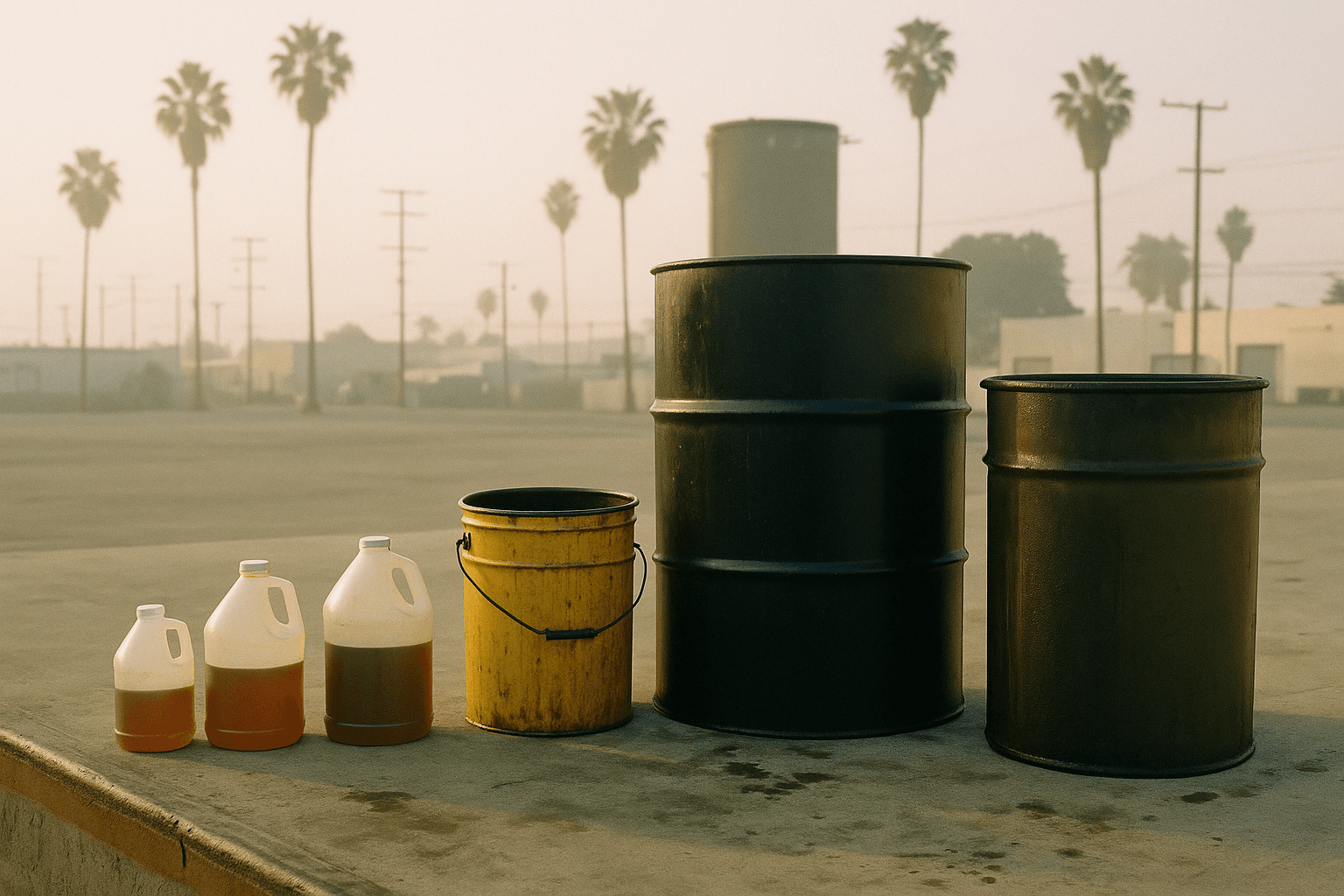
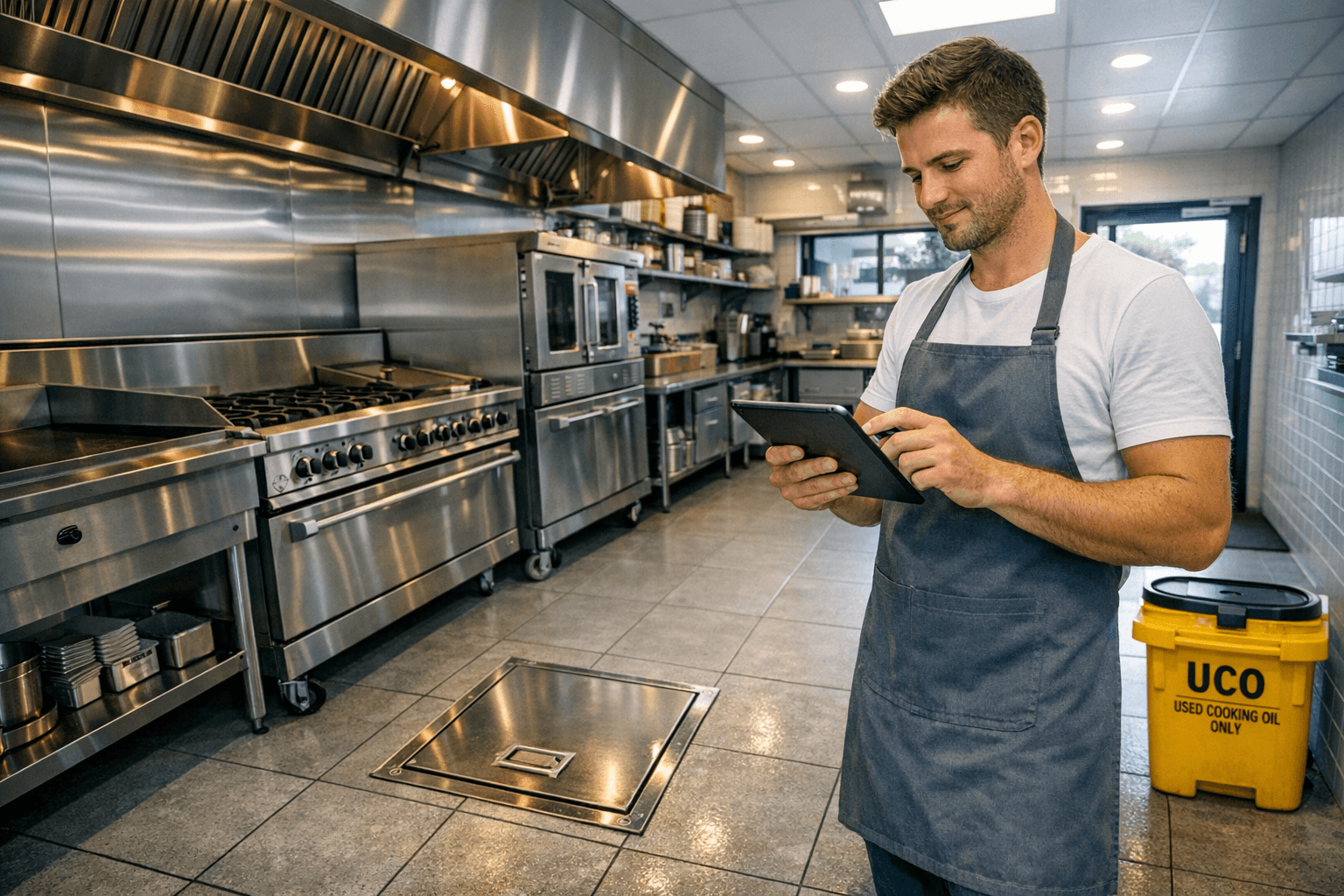
This is a separate system for the oil you drain from your fryers. Used cooking oil goes into dedicated collection containers, not down the drain. A licensed hauler picks up this oil on a regular schedule.
These are two different waste streams with different regulations, different service providers, and different cost structures. Many new restaurant owners confuse them, which leads to compliance problems.
Step 1: Grease Interceptor Installation
Your grease interceptor is typically addressed during the build-out phase, often as part of your plumbing permit. Here is what you need to know:
Sizing Requirements
Grease interceptor sizing follows the California Uniform Plumbing Code and your local municipality's FOG ordinance. The size depends on:
- Number of kitchen fixtures draining into the interceptor (sinks, dishwashers, floor drains)
- Type and volume of cooking (fryers require larger capacity)
- Seating capacity and projected meal volume
- Local municipal requirements (some cities require larger interceptors than state minimums)
General sizing guidelines for Southern California:
| Restaurant Type | Typical Interceptor Size |
|---|---|
| Small cafe or coffee shop (no fryers) | 500 – 750 gallons |
| Sit-down restaurant (50 – 150 seats) | 1,000 – 1,500 gallons |
| Fast food with high-volume fryers | 2,000 – 3,000 gallons |
| Large banquet hall or hotel kitchen | 3,000+ gallons |
Your plumbing engineer calculates the exact size during the permit process. Do not undersize your interceptor. An undersized trap fills faster, requires more frequent cleaning, and increases your risk of FOG violations and sewer backups.
Installation Process
- Your plumber or general contractor submits an interceptor plan to the local sewer authority
- The authority reviews and approves the plan (this can take 2 to 6 weeks depending on the jurisdiction)
- The interceptor is installed during construction, typically underground in the parking lot or service area
- The sewer authority inspects the installation before you can pass final plumbing inspection
- You receive an approval document that becomes part of your permanent compliance file
Cost Expectations
Grease interceptor installation for a new restaurant in Southern California typically runs between $5,000 and $15,000 depending on size, site conditions, and local permit fees. This is a one-time construction cost.
Step 2: Grease Trap Cleaning Service
Once your interceptor is installed, you need a licensed company to clean it on a regular schedule.
California's 25% Rule
Most municipalities in Southern California enforce a version of the 25% rule: your grease interceptor must be pumped before FOG accumulation exceeds 25% of the tank's capacity. For a 1,000-gallon interceptor, that means cleaning before FOG reaches 250 gallons.
Typical cleaning frequency by restaurant type:
| Restaurant Type | Cleaning Frequency |
|---|---|
| Light cooking (cafe, sandwich shop) | Every 90 days |
| Standard sit-down restaurant | Every 30 – 60 days |
| High-volume frying (fast food, Asian cuisine) | Every 14 – 30 days |
What to Look For in a Cleaning Provider
- Valid business license and insurance
- Proper waste hauling permits for your municipality
- Written documentation after every cleaning (date, volume removed, condition assessment)
- Ability to handle emergency cleanings if your trap fills faster than expected
Step 3: Used Cooking Oil Collection
Your UCO collection is separate from grease trap cleaning. This is the oil you pour out of your fryers into dedicated containers.
Setting Up Collection Before You Open
Arrange your UCO hauler two to three weeks before your opening date. This gives them time to:
- Deliver collection containers to your location
- Walk your kitchen staff through the oil disposal process
- Set up a pickup schedule based on your projected oil volume
- Provide their CDFA IKG registration number for your compliance file
What to Look For in a UCO Hauler
The most important factors for a new restaurant:
CDFA Registration. Your hauler must hold a valid California Department of Food and Agriculture Inedible Kitchen Grease transporter registration. This is non-negotiable. Verify the registration number before signing any agreement.
Free collection. Used cooking oil has commodity value. Reputable haulers in Southern California collect UCO at no charge. If a hauler is trying to charge you for oil pickup, keep looking.
No contracts. The best providers operate month-to-month. You should not need to sign a multi-year agreement for basic oil collection, especially when you are just opening and do not yet know your exact volume.
Digital manifests. After every pickup, you should receive a manifest documenting the date, quantity, hauler ID, and CDFA registration number. These manifests are your compliance documentation for health inspections.
Reliable scheduling. Your hauler should confirm pickups and communicate proactively about any schedule changes. As a new restaurant, you need a provider who shows up consistently from the start.
Container Placement
Work with your hauler to determine the best container placement. The ideal location is:
- Near the back door or service entrance for easy staff access
- On a level, paved surface that can be cleaned if spills occur
- Away from customer-facing areas and parking spaces
- Accessible for the hauler's truck without blocking your loading dock
Step 4: Staff Training
Your kitchen staff needs to understand both grease systems before you open. Improper handling leads to violations, equipment damage, and increased costs.
What Every Kitchen Employee Should Know
For used cooking oil:
- How to safely drain and transport fryer oil to the collection container
- When to change fryer oil (based on quality, not just a calendar)
- Never pour UCO down any drain, ever
- How to report a full container or spill
For the grease trap:
- What goes into the grease trap system (all sink and floor drain water from the kitchen)
- What does not go into the grease trap (used cooking oil, food solids, chemicals)
- How to recognize signs of a filling trap (slow drains, odors, backups)
- Who to call for emergency cleaning
Create a Simple Reference Guide
Post a laminated one-page guide near the fryer station and back door covering:
- UCO hauler contact information and pickup schedule
- Grease trap cleaning company contact and next scheduled cleaning date
- Emergency spill cleanup procedure
- Location of manifests and compliance documents
Step 5: Compliance Documentation
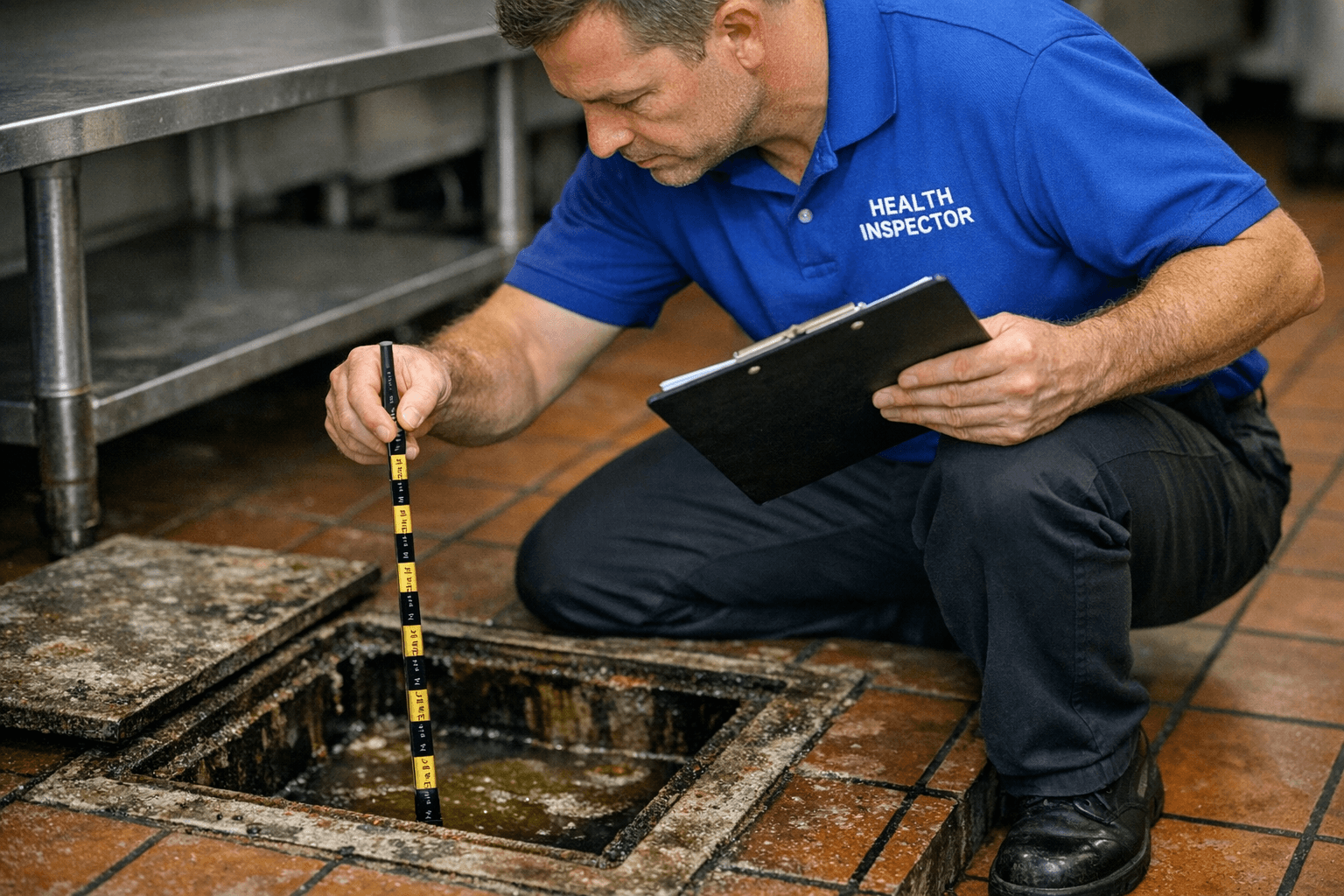
From day one, maintain an organized compliance file. Health inspectors in Southern California can and do check for these documents during inspections:
Required documents:
- Grease interceptor installation approval from the local sewer authority
- Grease trap cleaning records with dates, volumes, and service provider information
- UCO pickup manifests with dates, volumes, and CDFA hauler registration
- Your hauler's current CDFA IKG registration documentation
- Insurance certificates from both your trap cleaning and UCO providers
Storage recommendation: Keep physical copies in a binder near the manager's office for quick access during inspections. Also maintain digital backups. Some providers offer online portals or dashboards where you can access all documents electronically.
Common Mistakes New Restaurants Make
Waiting until after opening to arrange UCO pickup. Your first fryer oil change happens within days of opening. Have a hauler and containers in place before you start cooking.
Undersizing the grease interceptor to save money. A too-small interceptor costs more in the long run through more frequent cleaning and higher violation risk.
Using the same provider for trap cleaning and UCO pickup without comparing. These are different services with different economics. Your UCO pickup should be free. Your trap cleaning has a legitimate cost. Compare providers separately.
Not training staff on grease handling. A single employee pouring fryer oil down a drain can cause a sewer backup that costs thousands to remediate and triggers FOG violations.
Losing manifests. Inspectors ask for them. If you cannot produce your disposal records, you receive a citation regardless of whether the disposal actually happened properly.
Timeline for New Restaurant Grease Setup
| Weeks Before Opening | Action |
|---|---|
| 8 – 12 weeks | Submit grease interceptor plans to sewer authority |
| 6 – 8 weeks | Interceptor installation during build-out |
| 4 – 6 weeks | Schedule interceptor inspection with sewer authority |
| 3 – 4 weeks | Select and schedule grease trap cleaning provider |
| 2 – 3 weeks | Arrange UCO hauler and container delivery |
| 1 week | Train staff on grease handling procedures |
| Opening day | Compliance file ready, hauler contacts posted, first pickup scheduled |
The Bottom Line
Grease management is not the most exciting part of opening a restaurant, but getting it right from the start prevents expensive problems down the road. A properly sized interceptor, a reliable cleaning schedule, free UCO pickup with proper manifests, and trained staff are the foundation of a compliant kitchen in Southern California.
Set up everything before you open, and you will never have to think about it during an inspection.