Biodiesel Feedstock Collection — Consistent Supply, Verified Quality
Aggregated used cooking oil feedstock with guaranteed FFA content below 4%, full RIN-qualification documentation, and scalable monthly volume for biodiesel refineries, renewable diesel producers, and sustainable aviation fuel companies.
Biodiesel Feedstock Collection — Consistent Supply, Verified Quality
Aggregated used cooking oil feedstock with guaranteed FFA content below 4%, full RIN-qualification documentation, and scalable monthly volume for biodiesel refineries, renewable diesel producers, and sustainable aviation fuel companies.
Biodiesel feedstock collection aggregates used cooking oil from thousands of commercial kitchens into a consistent, quality-tested supply for renewable fuel producers. Professional aggregators provide FFA content guarantees below 4%, moisture testing, contaminant screening, and the chain of custody documentation required for RIN generation under the EPA Renewable Fuel Standard program.
Feedstock Supply Volatility Threatens Renewable Fuel Production Targets
Biodiesel and renewable diesel producers depend on a steady inflow of quality-tested used cooking oil to maintain production schedules, meet contractual volume obligations, and generate Renewable Identification Numbers under the EPA Renewable Fuel Standard. When feedstock supply is inconsistent — whether from spot market volatility, unreliable aggregators, or seasonal collection fluctuations — production lines slow down, RIN generation targets slip, and the financial model that justifies plant capital investment begins to erode. A refinery designed to process 10 million gallons annually cannot afford feedstock gaps that reduce throughput to seven or eight million gallons, yet this is exactly what happens when producers rely on fragmented spot market sourcing from dozens of small, uncoordinated collectors.
Quality control is the second critical challenge. Used cooking oil feedstock must meet specific parameters to enter the transesterification or hydroprocessing stage without causing equipment fouling, catalyst degradation, or off-spec fuel production. Free fatty acid content above 4 to 5 percent triggers additional pre-treatment steps that add cost and reduce yield. Moisture content above 0.5 percent accelerates catalyst deactivation. Contaminants like polymerized oil, food solids, and cleaning chemicals can damage processing equipment and compromise fuel quality. When feedstock arrives from unvetted spot market sources without consistent quality testing, producers absorb these problems as unplanned downtime, wasted chemicals, and off-spec product that cannot generate RINs.
The solution for renewable fuel producers is a dedicated feedstock aggregation partner with collection infrastructure across a dense restaurant market, quality testing protocols that screen every load before delivery, and the documentation systems required for RIN generation and IRS biodiesel tax credit compliance. A professional aggregator converts the chaos of thousands of individual restaurant pickups into a predictable, quality-guaranteed supply stream that producers can build production schedules around with confidence.
500K+
gallons monthly capacity
D4/D5
RIN-qualified pathways
<4%
FFA content guaranteed
Volume Aggregation Across a Dense Collection Network
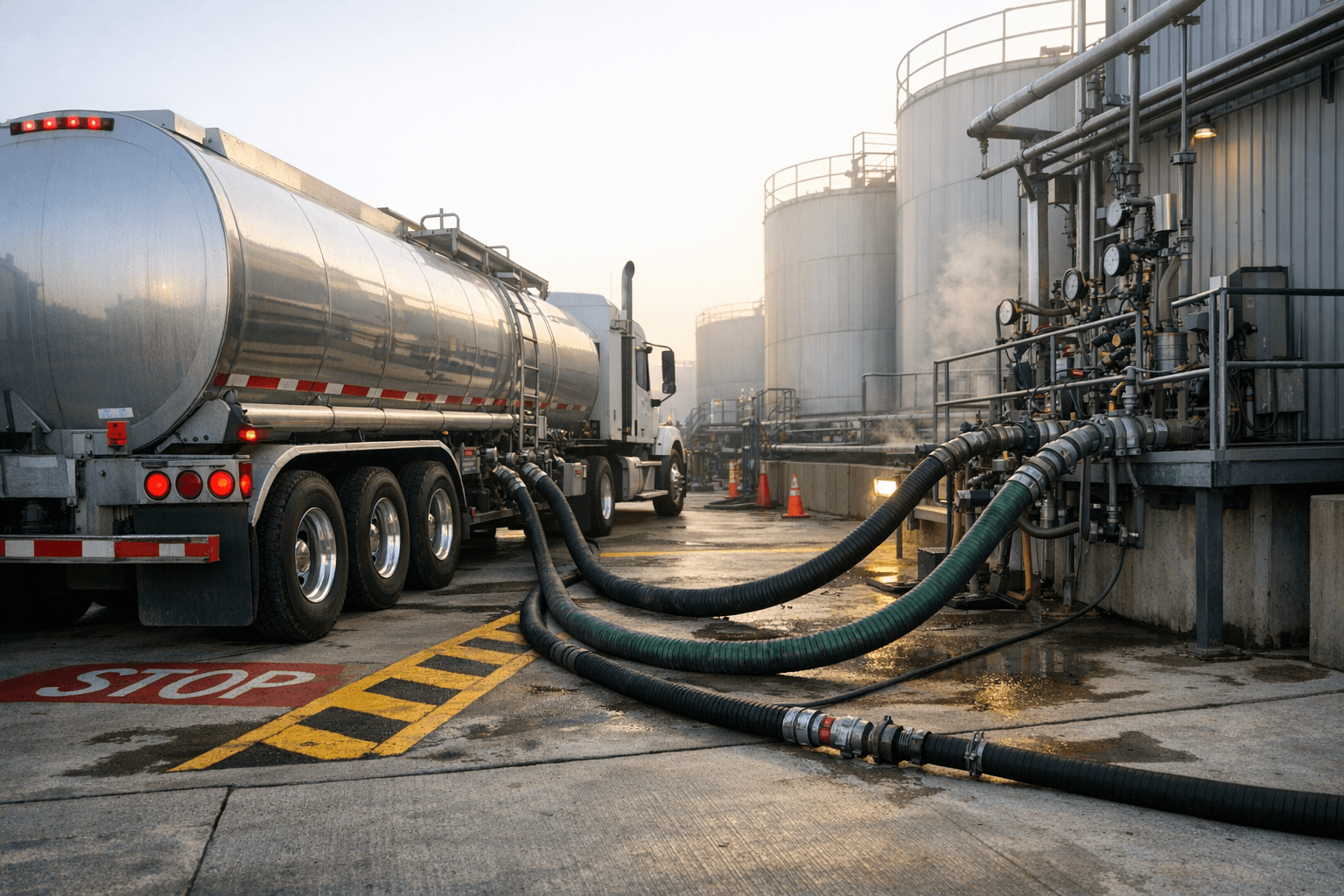
Our collection network spans thousands of commercial kitchens across Orange County, Los Angeles, and San Diego — one of the densest restaurant markets in the United States. This geographic concentration allows us to aggregate significant feedstock volumes efficiently, with collection routes that maximize gallon-per-mile density and minimize the transportation cost embedded in every gallon of feedstock we deliver. Monthly aggregation capacity exceeds 500,000 gallons, with the ability to scale as we add collection routes and restaurant accounts. For producers, this means a single supply relationship replaces dozens of fragmented agreements with small collectors who lack the route density, quality testing infrastructure, or documentation systems to provide reliable, RIN-qualified feedstock. We deliver on a schedule aligned to your production planning — weekly tanker loads, biweekly bulk deliveries, or custom cadences based on your storage capacity and processing schedule. Volume commitments are backed by contractual guarantees with clearly defined force majeure provisions, giving your procurement team the supply certainty that production planning requires.
- Monthly aggregation capacity exceeding 500,000 gallons
- Collection network spanning OC, LA, and San Diego counties
- High route density maximizes gallon-per-mile efficiency
- Delivery schedule aligned to your production planning cycle
- Contractual volume commitments with defined guarantees
Quality Testing and FFA Content Guarantees
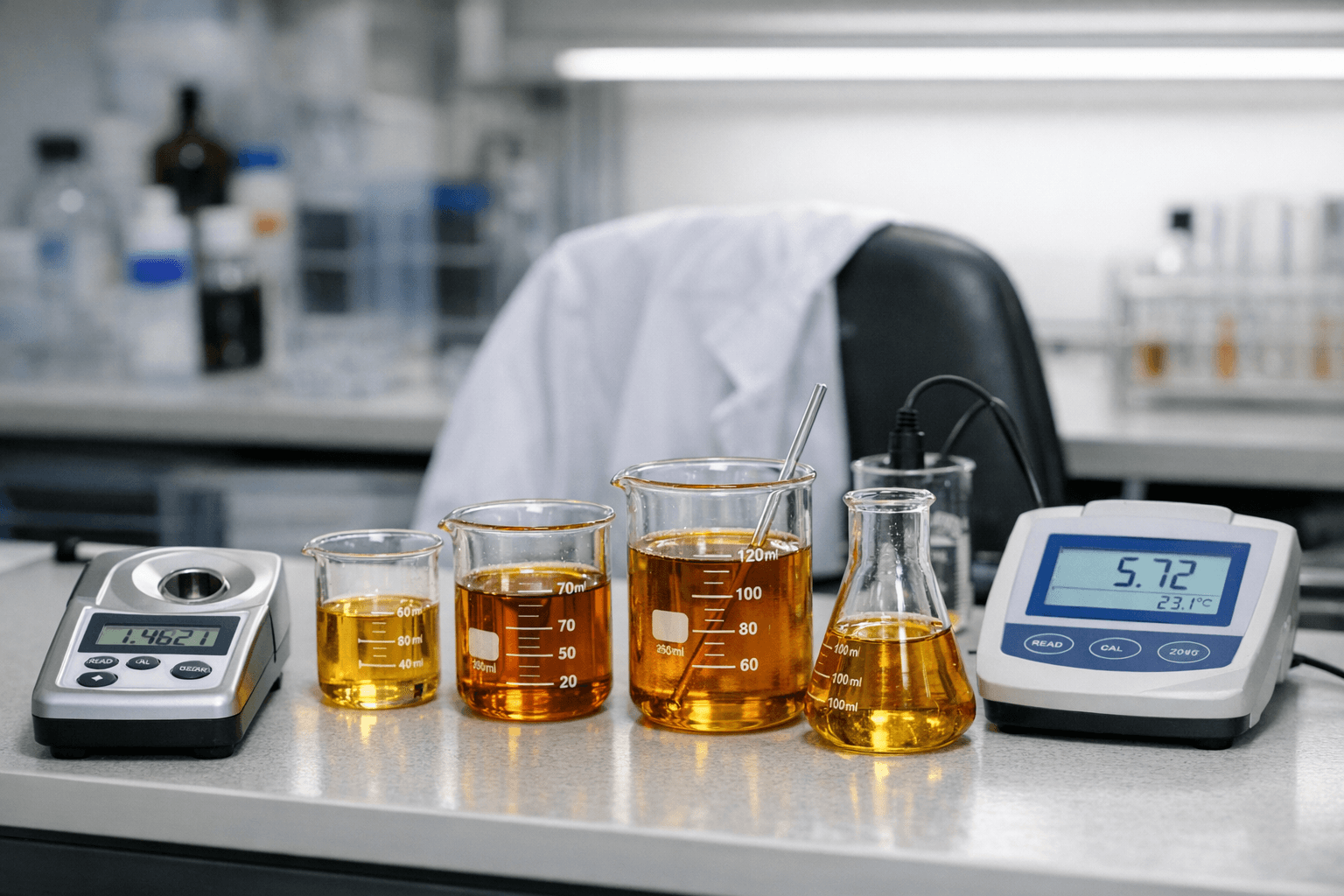
Every load of feedstock we deliver has been tested for the parameters that matter to your processing equipment and fuel quality. Free fatty acid content is held below 4 percent — well within the range that standard base-catalyzed transesterification handles without additional pre-treatment. Moisture content is tested and held below 0.5 percent to protect catalyst life and prevent side reactions that reduce yield. We screen for polymerized oil, food solids, cleaning chemical residues, and other contaminants that can cause equipment fouling or off-spec production. Quality testing happens at two stages: first at our aggregation facility when loads arrive from individual collection routes, and again before outbound delivery to your plant. Test results are documented and delivered with every load, giving your quality assurance team the data they need to approve incoming feedstock without redundant testing. If a load does not meet your specifications, we reject it at our facility before it ever reaches your receiving tank — your production line never sees off-spec material.
- FFA content guaranteed below 4% on every delivery
- Moisture content tested and held below 0.5%
- Contaminant screening for polymerized oil, food solids, and chemicals
- Two-stage testing — at aggregation facility and before outbound delivery
- Quality certificates delivered with every load for your QA records
RIN Generation Documentation and Regulatory Compliance
Generating Renewable Identification Numbers under the EPA Renewable Fuel Standard requires a documented chain of custody from the original feedstock source through processing to finished fuel. Our documentation systems are specifically designed to provide the upstream traceability that RIN-registered producers need. Every gallon we collect is tracked from the individual restaurant source through aggregation, quality testing, and delivery to your facility. The chain of custody record includes source identification, collection date, transporter credentials, aggregation facility receiving records, quality test results, and delivery confirmation. This documentation supports both D4 RIN generation for biomass-based diesel and D5 RIN generation for advanced biofuel pathways. For producers also claiming the federal biodiesel tax credit under IRS Form 8864, our documentation provides the feedstock sourcing records that substantiate credit claims during IRS examination. We maintain these records for the full duration of the applicable statute of limitations, ensuring that your feedstock documentation remains available for any regulatory inquiry years after the fuel was produced.
- Full chain of custody from restaurant source to your receiving tank
- Documentation supports D4 and D5 RIN generation pathways
- IRS Form 8864 biodiesel tax credit substantiation records
- Source identification, transporter credentials, and quality certificates
- Records retained for full statute of limitations duration

Supply Chain Logistics and Delivery Infrastructure
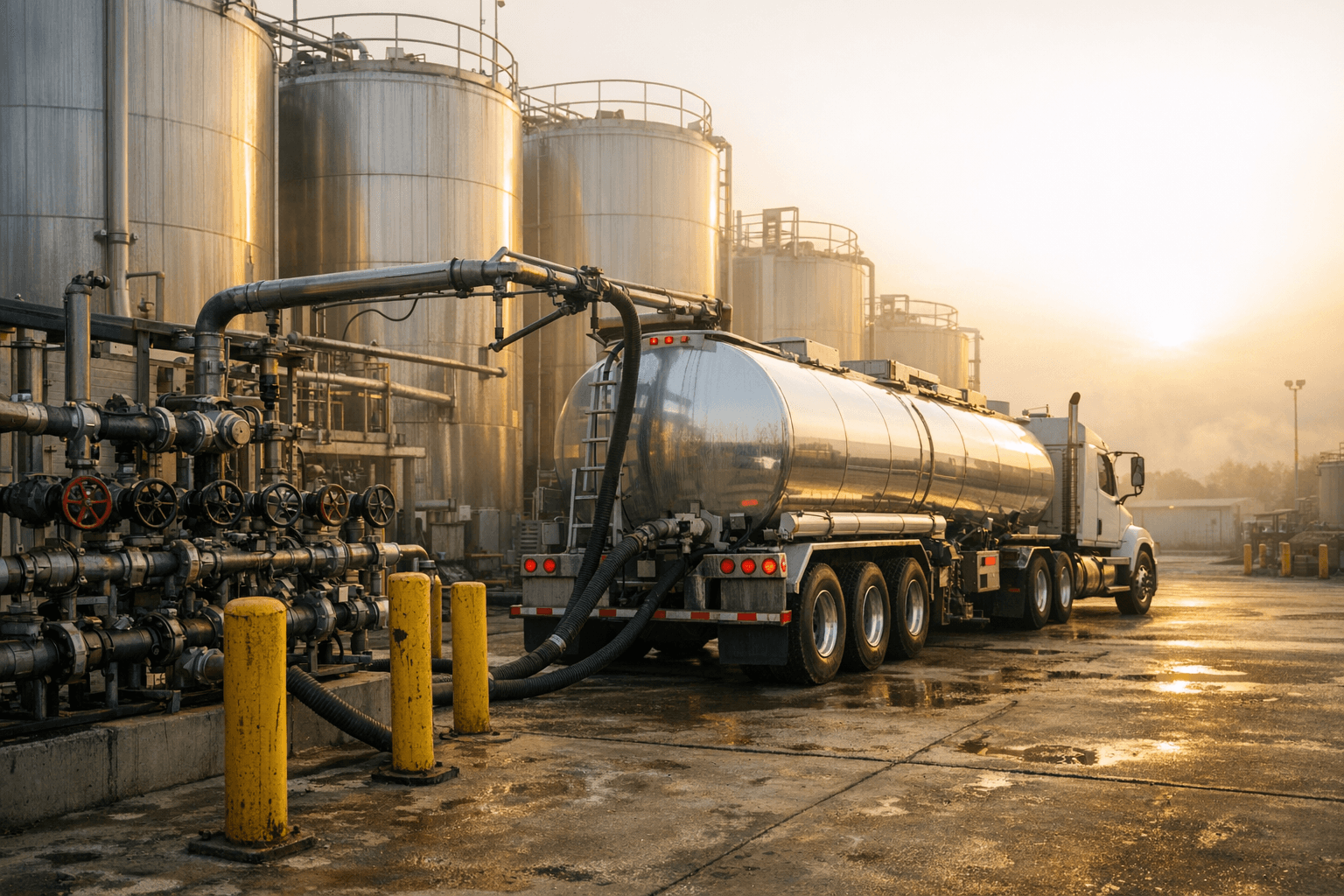
Moving feedstock from thousands of dispersed restaurant sources into your production facility requires logistics infrastructure that most spot market sellers cannot provide. Our fleet includes collection vehicles for restaurant-level pickups, tanker trucks for bulk transfer from aggregation facilities to your plant, and the dispatch and routing technology that coordinates the entire operation. Delivery scheduling is integrated with your production planning — if your processing capacity requires 100,000 gallons per week delivered in 25,000-gallon increments every Monday and Thursday, that is exactly what we build into the route plan. If your storage tanks limit single-delivery volume, we adjust load sizes accordingly. For producers with multiple receiving locations or seasonal production variations, we offer flexible delivery programs that redistribute volume across facilities or adjust delivery cadence without renegotiating terms. Our logistics team maintains direct communication with your receiving and procurement staff to coordinate delivery windows, tank availability, and any schedule adjustments that arise from planned maintenance or production changes at your facility.
- Dedicated tanker fleet for bulk feedstock delivery
- Delivery scheduling integrated with your production planning
- Adjustable load sizes based on your tank capacity constraints
- Multi-facility delivery coordination for producers with multiple plants
- Direct communication between our logistics team and your receiving staff
Who This Is For
Biodiesel Refineries
FAME biodiesel producers using base-catalyzed transesterification that need consistent, low-FFA feedstock to maintain yield and minimize pre-treatment costs.
Renewable Diesel Producers
Hydroprocessing facilities producing drop-in renewable diesel that require large-volume, quality-tested UCO feedstock for continuous operation and RIN generation.
Sustainable Aviation Fuel Companies
SAF producers sourcing HEFA-pathway feedstock that need documented chain of custody for CORSIA compliance and lifecycle carbon intensity scoring.
Oleochemical Manufacturers
Companies producing fatty acids, glycerin, and surfactants from UCO feedstock that need consistent quality and reliable supply for industrial chemical manufacturing.
Research Institutions
Universities and national laboratories conducting biofuel research, feedstock characterization studies, and process optimization that need characterized UCO samples.
Energy Cooperatives
Community-scale biodiesel cooperatives and municipal fuel programs that need an aggregated feedstock supply without building their own restaurant collection infrastructure.
Us vs. Spot Market Sourcing
Spot Market Sourcing
Dedicated Aggregation Partner
What's Included
Everything you need — nothing you don't.
- Contractual monthly volume commitments aligned to your production needs
- FFA content guaranteed below 4% on every delivery
- Moisture content tested and held below 0.5%
- Two-stage quality testing at aggregation and before delivery
- Quality certificates and test results with every load
- Full chain of custody documentation for RIN generation
- IRS Form 8864 biodiesel tax credit substantiation records
- Delivery scheduling integrated with your production calendar
- Dedicated tanker fleet for bulk feedstock transport
- Multi-facility delivery coordination available
- Direct communication channel with logistics and quality teams
- Records retained for full regulatory statute of limitations
How It Works
Three steps. Five minutes. Done.
Request a Quote
Fill out a 30-second form or call us. No credit card, no commitment.
We Show Up On Time
Our uniformed driver arrives in a branded truck within your scheduled window. Every time.
Stay Compliant Automatically
Get digital manifests, pickup confirmations, and compliance records — all in your dashboard.
Frequently Asked Questions
Every load we deliver is tested and guaranteed to have a free fatty acid content below 4 percent and a moisture content below 0.5 percent. These specifications are suitable for standard base-catalyzed transesterification without additional acid-catalyzed pre-treatment. We also screen for polymerized oil, food solids, cleaning chemical residues, and other contaminants that affect processing equipment and fuel quality. Quality testing happens at two stages — when oil arrives at our aggregation facility from collection routes and again before outbound delivery to your plant. Test results are documented on a quality certificate that accompanies every load. If your facility has tighter specifications than our standard guarantees, we can discuss custom quality parameters and adjusted testing protocols. Any load that fails testing is rejected at our facility before it reaches your receiving tank, so your production line never encounters off-spec feedstock that could cause catalyst degradation or yield loss.
RIN generation under the EPA Renewable Fuel Standard requires producers to demonstrate that their feedstock originated from a qualifying source and followed a documented pathway from origin through processing. Our chain of custody system tracks every gallon from the individual commercial kitchen where it was collected through aggregation, quality testing, and delivery to your facility. The documentation includes source identification, collection date and manifest number, transporter CDFA license credentials, aggregation facility receiving records, quality test results, and delivery confirmation with volume and date. This upstream traceability is what EPA-registered producers need to generate D4 RINs for biomass-based diesel or D5 RINs for advanced biofuel. The EPA maintains approved pathway requirements at epa.gov/renewable-fuel-standard/approved-pathways-renewable-fuel, and our documentation system is designed specifically to satisfy these requirements. We also retain all records for the duration applicable to regulatory and tax examinations.
Our current monthly aggregation capacity exceeds 500,000 gallons, sourced from a collection network spanning thousands of commercial kitchens across Orange County, Los Angeles, and San Diego. Restaurant oil generation is relatively stable year-round compared to crop-based feedstocks, though we see modest increases during summer tourism season and holiday periods when restaurant traffic spikes. We manage seasonal fluctuations by maintaining a geographically diverse collection base — when one corridor slows, others compensate. For producers requiring volume commitments, we offer contractual guarantees with clearly defined terms, seasonal adjustment provisions, and force majeure language that protects both parties. If your production plans call for volume increases over time, our collection network is actively expanding with new restaurant accounts added weekly, giving us built-in headroom to scale supply alongside your growing demand.
Yes. The federal biodiesel mixture excise tax credit and the biodiesel producer credit, claimed on IRS Form 8864, require producers to maintain records substantiating the type, source, and quantity of feedstock used in production. Our documentation provides the feedstock sourcing records that substantiate these claims during IRS examination — including volume records, source identification confirming the oil originated from commercial food preparation operations (not virgin oil), quality test results, and delivery records matching feedstock receipts to your production logs. The IRS provides guidance on Form 8864 requirements at irs.gov/forms-pubs/about-form-8864. We maintain these records for the full duration of the applicable statute of limitations, which can extend to six years for substantial understatements. Your tax team can access our records through the compliance dashboard or request certified copies for audit response at any time.
Used cooking oil feedstock offers several advantages over virgin crop-based oils for renewable fuel production. First, UCO generates higher RIN values under the Renewable Fuel Standard because its lifecycle carbon intensity is significantly lower — the carbon in the oil was already embedded in the food supply chain, so converting it to fuel adds minimal new carbon burden. Second, UCO is not subject to the agricultural commodity price volatility that affects soybean oil, canola oil, and palm oil markets. Third, using waste-derived feedstock avoids the indirect land use change concerns and sustainability criticisms associated with crop-based biofuel feedstocks. The tradeoff is that UCO requires more rigorous quality control due to variability in FFA content, moisture, and contaminants — which is exactly why a professional aggregator with testing infrastructure adds value compared to spot market sourcing. For producers seeking the most favorable carbon intensity scores for LCFS credits or the highest RIN category, waste-derived UCO consistently outperforms virgin crop oils.
Our collection operation holds all required California licenses for used cooking oil transportation and aggregation. Every driver carries a current CDFA transporter license for inedible kitchen grease under California Code of Regulations Title 3, and our aggregation facility operates under a CDFA rendering license as required by CCR Title 3 Section 1180.32, available at regulations.justia.com/states/california/title-3/division-2/chapter-4/subchapter-2/article-44/section-1180-32/. We maintain manifest documentation that meets CDFA Title 3 requirements for every collection event, and our chain of custody systems satisfy the upstream documentation standards that EPA-registered renewable fuel producers need for RIN generation under the Renewable Fuel Standard program at epa.gov/renewable-fuel-standard-program. Our licensing, insurance, and compliance records are available for review by your procurement and legal teams during vendor qualification. We proactively renew all licenses and maintain continuous compliance — you will never receive a delivery from an operation with lapsed credentials.
What Our Clients Say
“We switched from spot market sourcing to a dedicated aggregation relationship and our feedstock quality issues dropped to near zero. The FFA guarantee means we stopped running pre-treatment on every load, which cut our processing cost significantly. The RIN documentation is audit-ready out of the box.”

Robert Kauffman
Procurement Director, Pacific Renewable Fuels
Long Beach
“As a community-scale producer, we do not have the infrastructure to collect from individual restaurants ourselves. The aggregated supply with quality testing at their facility means we receive tanker loads that we can process immediately without additional screening or reject handling.”

Dr. Anita Sharma
Chief Operating Officer, SoCal Biodiesel Cooperative
Riverside
“The chain of custody documentation has been bulletproof through two EPA audits. Every gallon traceable from source restaurant through our receiving tank, with quality certificates and manifest records that our compliance team can pull in minutes. That level of upstream traceability is rare in this industry.”

Thomas Bergstrom
VP of Supply Chain, Western Renewable Energy
Carson
Related Solutions
Cooking Oil Recycling
Full-lifecycle recycling from fryer to biodiesel with carbon offset quantification and ESG reporting for sustainability-focused operations.
Learn moreYellow Grease Recycling
Sealed container systems, GPS tracking, and theft prevention for high-volume operations producing yellow grease.
Learn moreBulk UCO Disposal & Recycling
Industrial-scale tanker collection for food processors, manufacturers, and high-volume commercial kitchens.
Learn moreLast updated April 10, 2026
Secure Your Feedstock Supply Today
Consistent volume, guaranteed quality, full RIN documentation. Talk to our supply chain team about your production requirements.