Grease hauling in California is a regulated industry. Any company that collects, transports, or processes used cooking oil or restaurant grease for compensation must be registered with the California Department of Food and Agriculture (CDFA) under the Inedible Kitchen Grease (IKG) program. If your grease hauler isn't registered, you may be accepting more legal and regulatory risk than you realize.
This guide explains the licensing requirements for grease haulers in California, how to verify a hauler's credentials before allowing them on your property, and the red flags that should prompt you to look for a different provider.
Why Grease Hauler Licensing Matters
The IKG program exists for several reasons. Cooking oil and restaurant grease is a commodity with real market value. That value creates an incentive for unlicensed operators—sometimes called "grease pirates"—to collect oil from restaurants without authorization, documentation, or proper disposal practices. The IKG registration system creates accountability at every step of the collection chain.
For restaurant operators and food service businesses, the stakes are real:
Regulatory liability: California law places responsibility on grease generators to use registered haulers. If your hauler is unregistered and is cited during an inspection or enforcement action, your business may be implicated for using illegal disposal services.
No documentation, no defense: A licensed hauler provides manifests at every pickup. These records document that your grease was properly handled. An unlicensed hauler provides nothing—leaving you without evidence of proper disposal if you're ever audited by a local health department, wastewater agency, or environmental regulator.
Grease theft exposure: Unlicensed collectors are sometimes not offering a service at all—they're stealing your oil. Once they remove it from your property, you have no idea where it goes or whether its disposal creates downstream liability for you.
Quality of downstream processing: Unlicensed haulers rarely send oil to regulated processors. Your used cooking oil may end up in an improper disposal site, contaminating soil or water, rather than being recycled into biodiesel or other beneficial uses.
California's IKG Registration Requirements
Under California Food and Agricultural Code Section 19300 et seq., any person or company that hauls inedible kitchen grease—which includes used cooking oil, yellow grease, and brown grease from grease traps—must hold a valid IKG registration from the CDFA.
The IKG program requires registered haulers to:
- Maintain and operate clean, properly-equipped vehicles
- Provide a manifest at each collection documenting the volume collected, generator information, hauler registration number, and receiving facility
- Transport grease only to CDFA-registered receiving facilities (renderers, biodiesel processors, or other permitted handlers)
- Renew their registration annually and maintain accurate business records
- Make records available to CDFA inspectors upon request
Registration is not a one-time process. It must be renewed annually, and CDFA conducts ongoing compliance checks including vehicle inspections and manifest audits.
How to Look Up a Grease Hauler's IKG Registration
The CDFA maintains a public database of registered IKG haulers and receivers. You can access it through the CDFA's website at cdfa.ca.gov under the Meat, Poultry, and Egg Safety Branch (MPES) section.
Here's the verification process:
Step 1: Ask the Hauler Directly
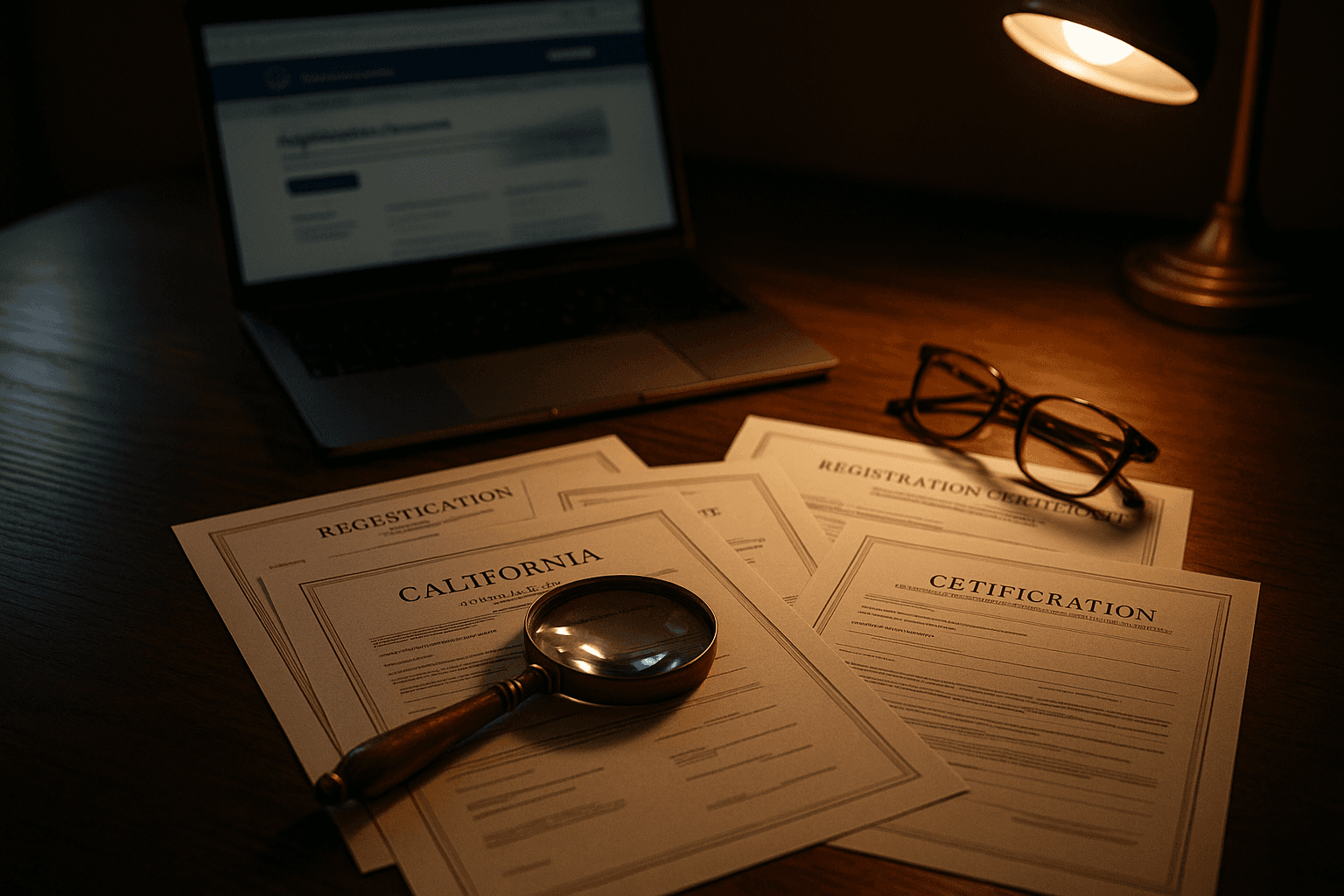
Before allowing any company to collect your grease, ask them for their CDFA IKG registration number and a copy of their current registration certificate. A legitimate, licensed hauler will provide this immediately without hesitation. If a collector is evasive, claims they don't need a license, or can't produce a registration number, that's a significant red flag.
Step 2: Search the CDFA IKG Database
Visit the CDFA's IKG registrant lookup tool online. You can search by company name or registration number. Confirm that:
- The company name matches what the hauler told you
- The registration status shows as "Active" (not expired or suspended)
- The registration covers the type of grease they'll be hauling from your operation (yellow grease, brown grease, or both)
Step 3: Verify the Registration Is Current
IKG registrations expire annually. An expired registration is a problem even if the company was once legitimate. Always check the expiration date, not just whether the company appears in the database.
Step 4: Record the Registration Number
Keep a written record of your hauler's IKG registration number, the date you verified it, and how you verified it (online database lookup, copy of certificate, etc.). Review and re-verify annually when their registration renews.
What to Check Beyond the License
CDFA IKG registration is the baseline. A licensed hauler is better than an unlicensed one, but registration alone doesn't tell you everything you need to know. Here's what else to evaluate:
Manifest Practices
Every pickup should come with a manifest. This is not optional—it's required by California regulation. The manifest should include:
- Your business name and address
- The hauler's IKG registration number
- The date and time of pickup
- The volume collected (in gallons or pounds)
- The receiving facility where the oil will be taken
If your current hauler skips manifests, provides them inconsistently, or provides documents that are missing required information, that's a compliance problem—even if they are licensed.
Vehicle Condition and Equipment
Licensed haulers are required to maintain their vehicles in clean, operable condition. A pump truck that's leaking, improperly sealed, or visibly contaminated is a sign of a poorly-run operation. If a hauler's equipment causes a spill on your property, you may face cleanup obligations.
Container Security
Your outdoor grease container should be lockable, and a legitimate provider will supply one that is. If a hauler hasn't provided or isn't maintaining a proper container—or if you find your container has been accessed between scheduled pickups—something is wrong.
Transparency About Pricing and Volume
Legitimate providers will be transparent about how they measure collected volume. For most single-location restaurants, free pickup is the standard arrangement. If a hauler is vague about what volume they're collecting or doesn't provide receipts that specify volume, request clarification. Disputes over measured volumes are not uncommon in this industry.
Red Flags: When to Walk Away
These are warning signs that a grease hauler may be unlicensed, unreliable, or operating unethically:
- Cannot produce an IKG registration number or certificate on request
- Approaches you unsolicited, offering to collect your grease with promises that sound too good to be true and no established business identity
- Declines to provide manifests or produces paperwork that lacks required information
- Uses unmarked vehicles with no company name or contact information
- Offers prices dramatically higher than other licensed collectors in your area (often a sign of a theft ring or a scheme that won't last)
- Accesses your container outside of scheduled pickup times without your authorization
- Cannot identify a receiving facility where they take the collected oil
If you suspect your container has been accessed by an unauthorized party—a sign of grease theft—report it to CDFA's IKG compliance division and to local law enforcement.
Southern California Enforcement Context
The Los Angeles Basin and San Diego regions have seen significant grease theft enforcement activity over the years. The CDFA has conducted coordinated operations targeting unlicensed haulers in densely-populated food service corridors throughout Southern California. Courts have imposed fines and in some cases criminal charges on operators running grease theft rings.
High-density restaurant corridors in cities like Anaheim, Santa Ana, Los Angeles, and San Diego have historically been targeted by grease pirates, given the concentration of restaurant grease available and the high commodity value of Southern California UCO. If your restaurant is in one of these areas, the risk of unlicensed hauler activity is not theoretical.
Choosing a Verified, Licensed Grease Hauler
Kitchen Oil Recycling holds current CDFA IKG registration and operates throughout Orange County, Los Angeles County, and San Diego County. We provide manifests at every pickup, use locked containers, and are transparent about volume, quality, and pricing.
Our services include:
- Free used cooking oil pickup for qualifying accounts
- Bulk cooking oil disposal and recycling for high-volume generators
- Grease trap cleaning for brown grease management
- Equipment placement and maintenance including secure, locked containers
- Emergency service for overflow or urgent situations
When you work with Kitchen Oil Recycling, you can request our IKG registration details at any time. We believe in full transparency—because that's what proper licensing requires, and because it's the right way to operate.
If you're currently working with a hauler and aren't sure of their licensing status, use the CDFA lookup tool today. It takes five minutes and could save you from a significant compliance headache down the road.