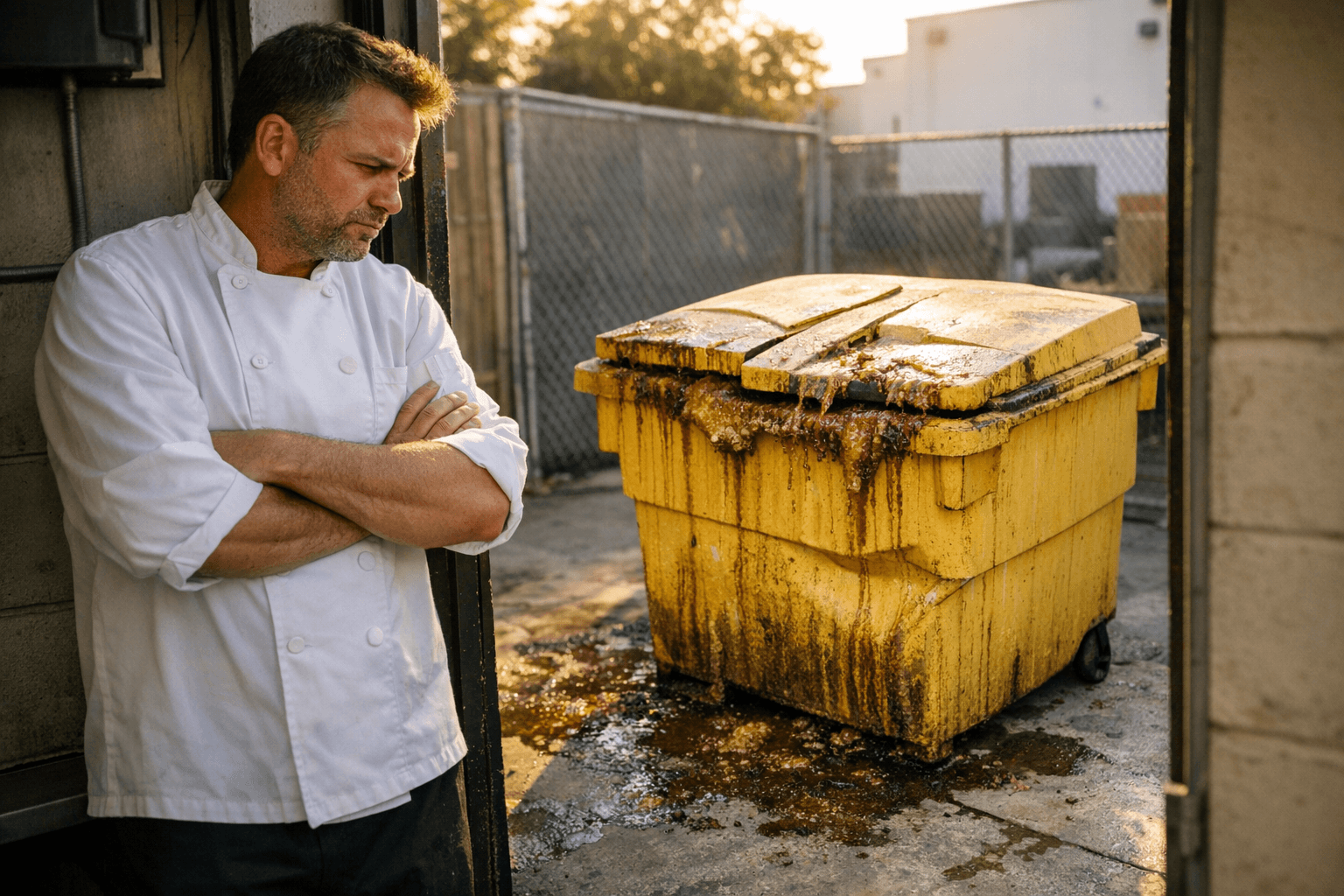
If you've never used a professional grease pickup service before — or if you've had a bad experience with a previous provider and aren't sure what good service actually looks like — this guide is for you.
We'll walk through every stage of the process: what happens when you first sign up, what the initial site visit looks like, how containers work, what collection day should feel like, and how to read the documentation you receive. By the end, you'll know exactly what to expect and how to tell whether your provider is doing the job right.
Before the First Visit: What Happens When You Sign Up
When you contact a grease pickup provider, the intake process should be straightforward. Expect to provide:
- Your business name and address
- The type of operation (full-service restaurant, fast food, cafeteria, catering, etc.)
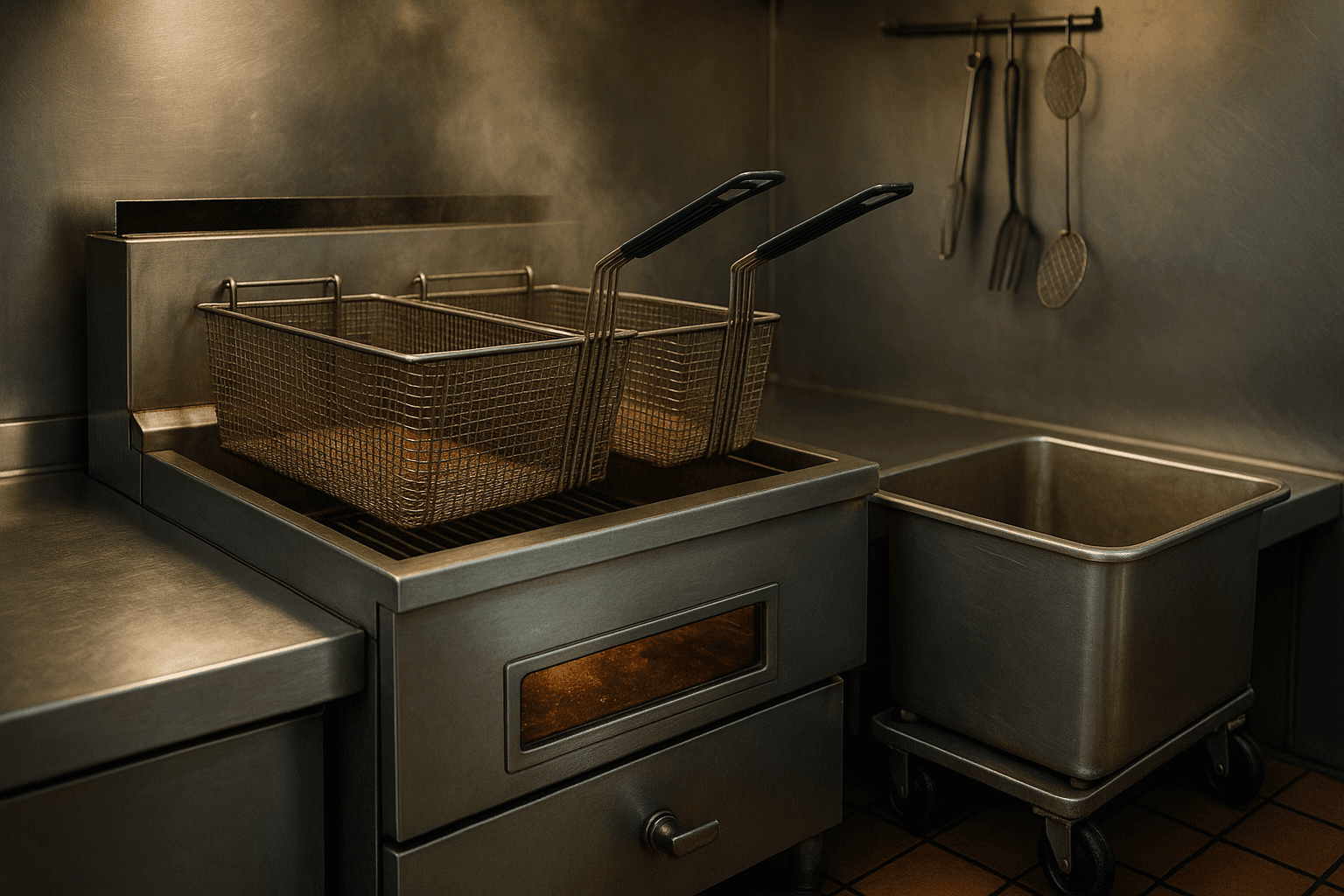
- How many fryers you operate and their approximate capacity
- An estimate of how often you change fryer oil
- Whether you have an existing container or need one supplied
Based on this information, the provider will recommend a container size and pickup frequency. Don't just accept the first recommendation — ask what happens if you run out of capacity early, and what the process is for adjusting your schedule.
Good providers will also discuss contract terms upfront. Ask about contract length, early termination clauses, and whether pricing is fixed or subject to market adjustments. Month-to-month agreements with clear, written terms are ideal. Be cautious of multi-year contracts with steep exit fees.
The First Site Visit
Before your first scheduled pickup, your provider should send someone out to assess the site and place your container. This visit usually takes 20–30 minutes and serves several purposes:
Container placement selection. The driver or sales rep will identify the best location for your collection container. Key considerations include:
- Accessibility for a service vehicle (typically a pump truck, sprinter van with drum trolley, or tanker)
- Distance from your kitchen to minimize staff effort when transferring oil
- Local code requirements (some cities require grease containers to be screened or enclosed)
- Landlord rules if you're in a shared commercial space
Reviewing your kitchen workflow. A good provider will ask where your fryers are, how staff currently transfer oil, and whether you have an oil caddy or pump. If your current oil transfer setup is unsafe or sloppy, they should point that out and recommend a solution. Proper oil handling protects your staff and protects the quality of the oil being collected.
Explaining the manifests. Your provider should walk you through what documentation you'll receive at each pickup and how to store it. If they don't bring this up, ask.
Establishing emergency contacts. Get a direct number for dispatch or service, not just a general customer service line. When your container is full or a pickup is missed, you need to reach someone who can act quickly.
Container Types and What They Mean for You
The container your provider supplies will depend on your volume. Common options:
55-gallon drums. Standard for small to medium cafes, food trucks, and low-volume restaurants. Easy to place, easy to manage. If you're generating more than a drum every two to three weeks, you'll likely need something larger.
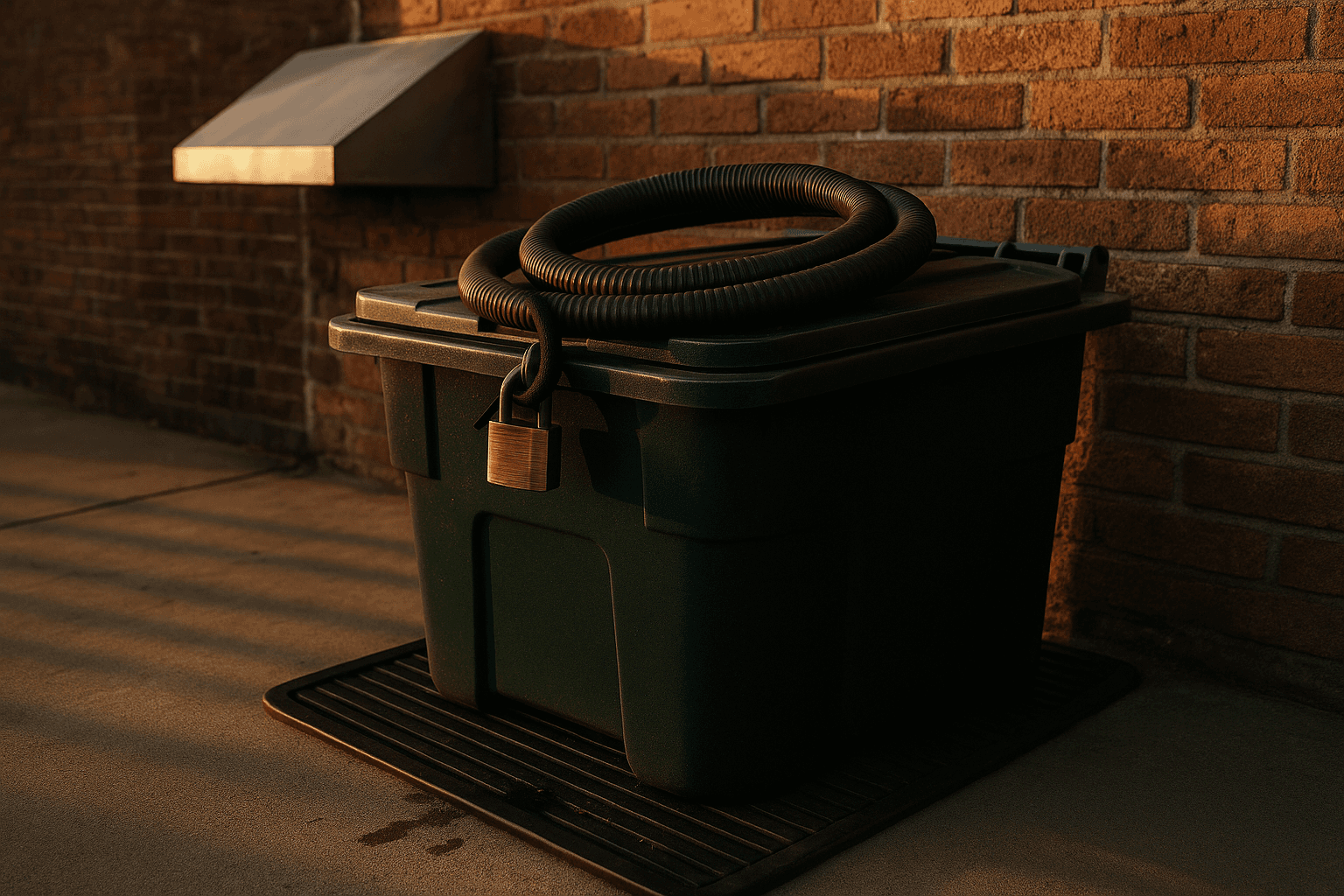
250–300 gallon collection bins. The most common size for mid-volume restaurants. Usually locked with a padlock or proprietary key. These sit on a hard surface and are pumped by the driver's truck-mounted equipment.
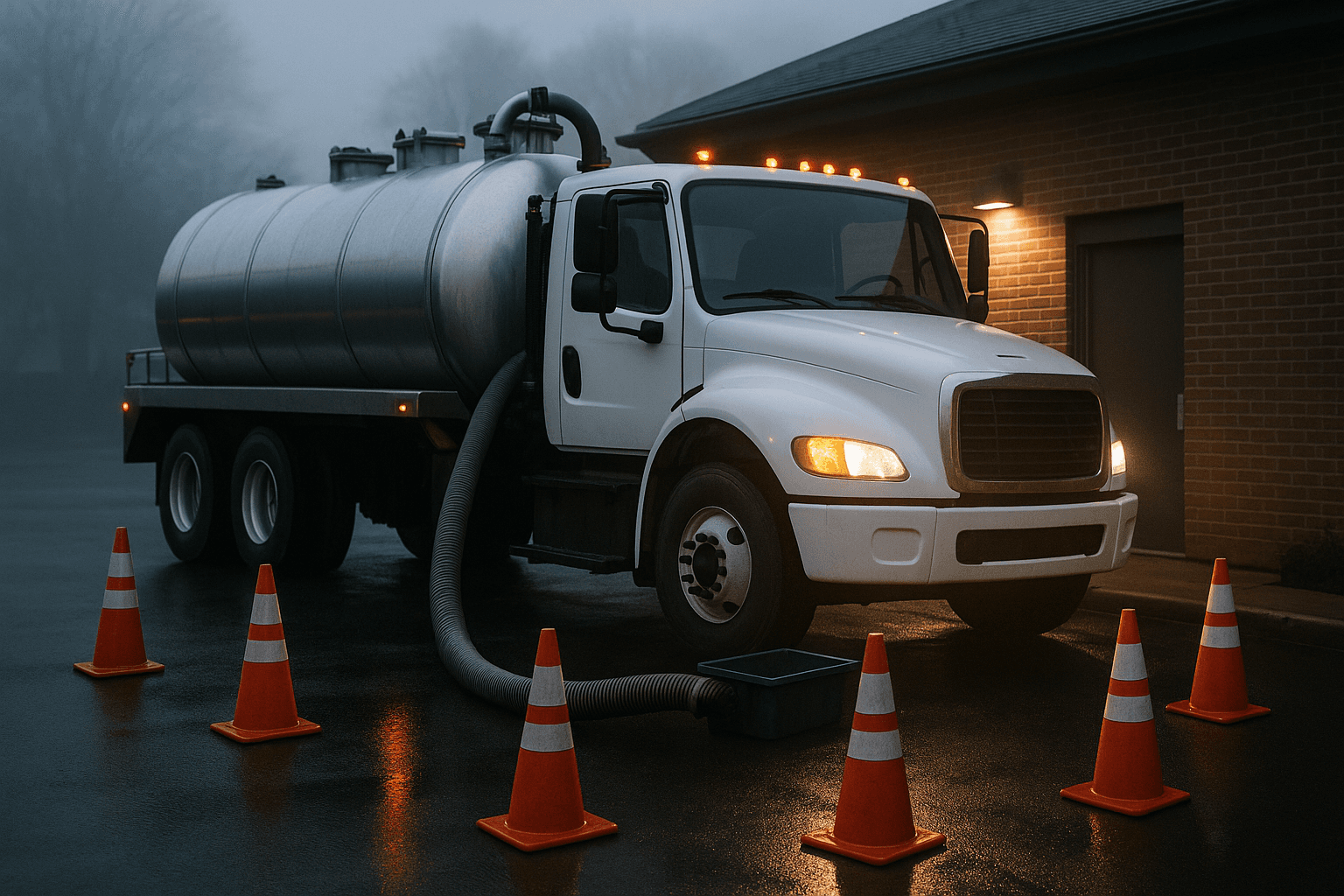
500+ gallon tanks. For high-volume operations — large commissaries, food manufacturers, busy fast food locations. These are typically stationary and require a vacuum truck for collection.
Regardless of size, your container should:
- Be sealed with a tight-fitting lid that latches or locks
- Be in structurally sound condition — no rust holes, cracks, or leaking seams
- Be clean enough that it doesn't attract pests or create odor problems
- Be clearly labeled as a cooking oil or grease collection container
If the container your provider supplies is in poor condition, ask for a replacement before accepting service. A leaking or unlocked container is a liability for your property and an invitation for theft.
For high-volume operations, Kitchen Oil Recycling's bulk cooking oil disposal and recycling program includes large-capacity container placement and dedicated pickup scheduling with equipment matched to your volume.
What Happens on Pickup Day
Regular collection day should be largely invisible to your operation. Here's what the driver does:
-
Arrives and accesses the container area. Your staff doesn't need to escort the driver — they should know the access route. If your container is behind a locked gate, provide the driver with a key or code.
-
Connects the pump and empties the container. Using a vacuum pump mounted to the vehicle, the driver empties your container. This takes 10–20 minutes for most setups.
-
Records the volume. The driver notes the volume collected (by weight or measured volume) on the manifest.
-
Issues your manifest. You should receive a signed manifest on paper or digitally. This is your proof of compliant, documented collection. In California, this is legally required for every pickup.
-
Inspects and resets the container. The driver should close and lock your container after emptying. If anything looks off — damage, unusual contamination — a good driver will note it and report back.
You don't need a manager present, but your staff should be aware that the driver will be in the container area. Proactively introducing your key staff to the driver during the first few pickups builds familiarity and makes issue reporting easier.
Reading Your Manifest
Every manifest should include:
- Date and time of collection
- Your facility name and address
- Hauler name and CDFA registration number
- Volume collected (in gallons or pounds)
- Destination facility (where the oil is going for processing)
- Driver signature
File these manifests somewhere accessible. A simple binder labeled "Grease Collection Records" in the manager's office works fine. Digital records in your management software or a shared folder are even better. Health inspectors may request these during routine inspections, and CDFA auditors may also ask.
If any of these fields are missing from your manifest, follow up with your provider to correct the record.
Monitoring Your Service Quality
Once your service is running, watch for these signs that your provider is doing their job well:
Consistency. Pickups happen on or near the scheduled day without you having to call and remind them.
Responsiveness. When you do have a question or an urgent need, someone answers and takes action promptly.
Documentation. You receive a manifest every single time, without having to ask.
Container condition. Your container stays in good shape, locked between pickups, and the driver leaves the area clean.
No overflow. If your container fills up before pickup day, your provider proactively adjusts your schedule rather than waiting for you to call about an overflow.
If any of these are consistently missing, it's worth addressing with your provider — or considering a switch.
If a Pickup Is Missed
Missed pickups happen occasionally, even with good providers. How they handle it matters:
- Your provider should contact you proactively if a scheduled pickup can't happen.
- They should offer to reschedule within 24–48 hours.
- If your container is at or near capacity, this should be treated as urgent.
If missed pickups are a pattern — not a one-time incident — document the dates and reach out to your provider formally. Persistent missed pickups are a service failure and may be grounds for contract termination without penalty, depending on your agreement.
Kitchen Oil Recycling offers emergency service for situations where an unexpected overflow or urgent pickup is needed — because operational problems don't always happen on a convenient schedule.
Coordinating With Grease Trap Service
If your restaurant also has a grease trap (which most commercial kitchens with fryers require), it makes sense to coordinate your grease trap cleaning schedule with your UCO pickup. Neglecting either side of the equation creates problems — a poorly maintained grease trap makes FOG management harder, and high cooking oil volume without proper trap maintenance accelerates trap filling.
Kitchen Oil Recycling's grease trap cleaning service can be scheduled in coordination with your UCO pickup — same provider, streamlined communication, consolidated documentation.
A well-run grease pickup service should be something you barely notice — containers are in place, pickups happen on schedule, manifests show up in your inbox or binder, and your kitchen staff never has to worry about an overflowing container. If that's not the experience you're having, it's worth making a change.