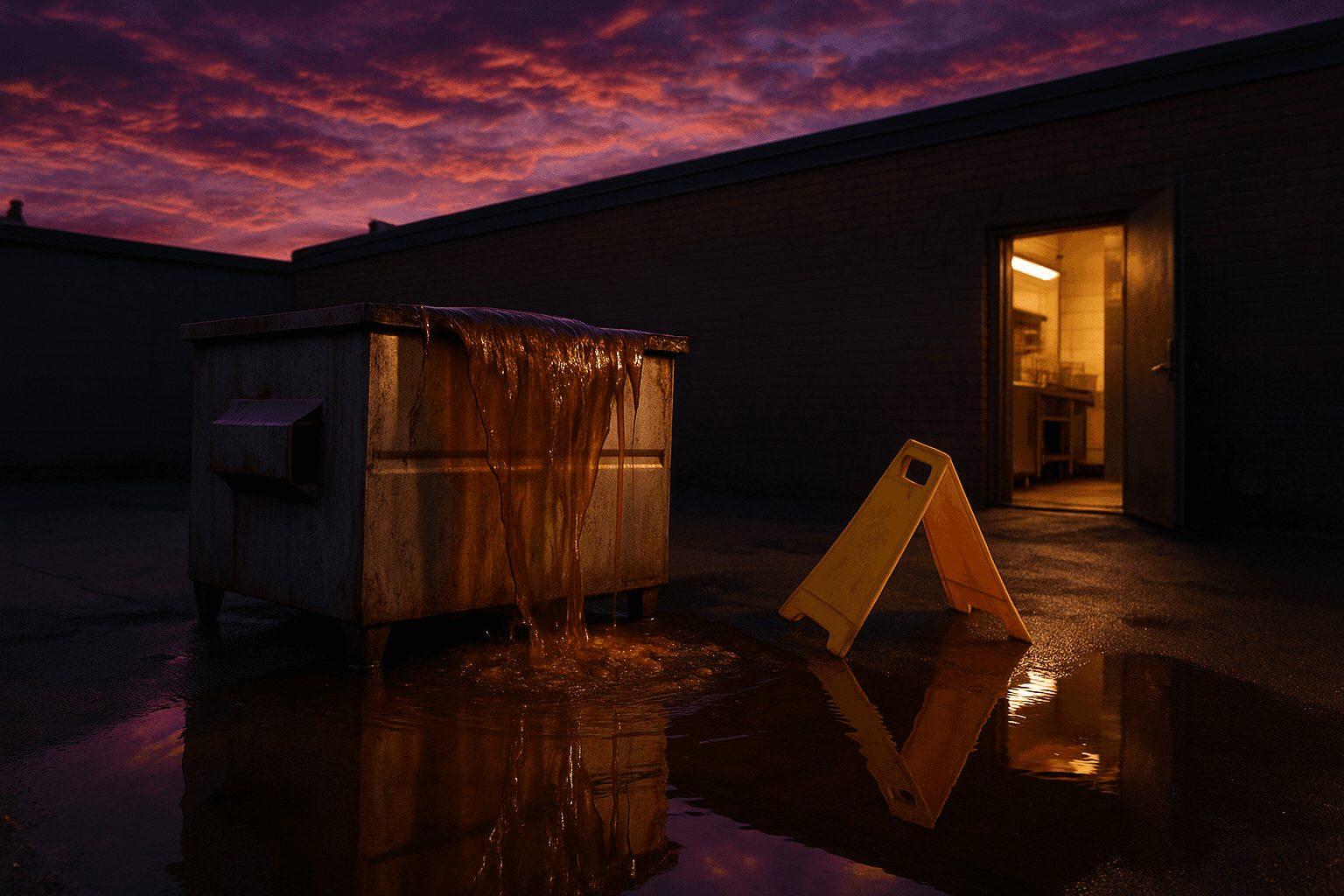
A grease trap overflow is one of the most stressful situations a restaurant operator can face. Grease backing up onto your kitchen floor during a busy dinner service, foul odors hitting the dining room, and the immediate fear of a health code violation combine to create a genuine emergency.
The good news is that how you respond in the first 30 minutes makes the difference between a manageable incident and a catastrophic one. This guide gives you a clear, step-by-step response plan.
Immediate Actions: The First 15 Minutes
When you discover a grease trap overflow, act fast. Every minute of delay makes cleanup harder and increases the risk of grease reaching floor drains, storm drains, or customer-visible areas.
1. Stop the Source
Immediately shut down all sinks, dishwashers, and any equipment draining into the affected trap. The overflow is happening because more water and grease are entering the system than can drain through the clogged trap. Stopping the flow prevents the situation from getting worse.
Post a staff member at each affected sink or drain if necessary to prevent anyone from running water until the situation is resolved.
2. Contain the Spread
Grab every absorbent material available: kitty litter, oil-absorbent pads, flour, or even dry towels. Create a barrier around the overflow area to prevent grease from spreading across the kitchen floor, reaching floor drains, or flowing toward dining areas.
Critical: If grease is heading toward a floor drain that leads to the storm sewer (not the sanitary sewer), block that drain immediately. Grease entering the storm drain system triggers environmental violations with much steeper penalties than a standard health code issue.
3. Call for Emergency Pumping
Contact your grease hauler and request emergency service. Most licensed haulers offer same-day emergency pumping with response times of two to six hours. When you call, provide:
- Your restaurant name and exact address
- The location of the trap access point (interior, exterior, parking lot)
- An estimate of the overflow severity
- Whether grease has reached any floor drains or exterior areas
If your regular hauler cannot respond within an acceptable timeframe, call a backup. This is why every restaurant should keep at least two hauler contact numbers posted in the kitchen.
Cleanup Procedures
Once the overflow is contained and emergency pumping is scheduled, begin cleanup immediately. Do not wait for the pumping truck to arrive.
Interior Cleanup
- Remove bulk grease using flat shovels, scrapers, or squeegees. Collect it in buckets or trash bags lined with absorbent material.
- Apply absorbent material (kitty litter works well) to remaining grease on the floor. Let it sit for 10 to 15 minutes to absorb, then sweep it up.
- Degrease the floor using hot water and a commercial degreasing agent. Do not use the kitchen sinks for this. Use mop buckets filled at a utility sink that drains to a different line if possible, or use minimal water to avoid overwhelming the already-compromised trap.
- Sanitize after degreasing. The floor must be both clean and sanitized before resuming normal kitchen operations.
- Inspect floor drains in the affected area. If grease entered any floor drains, note this for the pumping crew so they can assess whether the drain lines need flushing.
Exterior Cleanup
If grease reached exterior areas, pavement, parking lots, or loading docks:
- Apply absorbent granules immediately to prevent spread
- Scrape and bag all grease-saturated absorbent for disposal by your hauler
- Pressure wash the area with hot water and degreaser once bulk grease is removed
- Check nearby storm drain grates for any grease contamination
Documentation: Protect Yourself
Start documenting from the moment you discover the overflow. This documentation serves two purposes: it demonstrates due diligence to health inspectors, and it provides a record for insurance claims if needed.
Take photos of:
- The overflow area before cleanup
- The cleanup process in progress
- The area after cleanup is complete
- The condition of the trap access point
Record these details in writing:
- Date and time the overflow was discovered
- Who discovered it and who was notified
- What caused the overflow (trap at capacity, blockage, equipment malfunction)
- Actions taken in order with timestamps
- When the emergency pumping crew arrived and completed service
- Total waste removed during emergency pumping
Keep this record in your grease trap maintenance log binder.
When to Call the Health Department
In most California jurisdictions, you are not required to self-report a grease trap overflow to the health department unless grease entered the storm sewer system or caused a public nuisance. However, if you suspect grease reached the municipal sewer or storm drain, contact your local wastewater authority immediately. Prompt self-reporting typically results in better outcomes than waiting for the agency to discover the issue independently.
If a health inspector arrives while you are still dealing with the overflow, be transparent. Show them your documentation, explain the steps you have taken, and present the emergency pumping receipt. Inspectors deal with these situations regularly and are far more lenient with operators who respond responsibly.
Preventing the Next Overflow
Once the emergency is resolved, take these steps to make sure it does not happen again:
Increase pumping frequency. If your trap overflowed because it reached capacity before the next scheduled service, your cleaning interval is too long. Shorten it by at least 25 percent.
Install a high-level alarm. Electronic grease level monitors cost a few hundred dollars and provide an alert when the trap reaches a preset threshold. This gives you days of warning instead of zero.
Audit kitchen practices. An overflow often reveals underlying habits that accelerate grease buildup: staff pouring fryer oil down sinks, inadequate plate scraping, or running the dishwasher with heavily soiled cookware.
Keep backup hauler contacts posted. Your primary hauler may not always be available for emergencies. Having a second licensed option ensures you can always get same-day service.
The Bottom Line
A grease trap overflow is never pleasant, but it does not have to become a disaster. The restaurants that recover quickly are the ones with a clear response plan: contain, call, clean, and document. Taking these steps in the right order minimizes damage, protects your health code standing, and gets your kitchen back to normal operations as quickly as possible.